

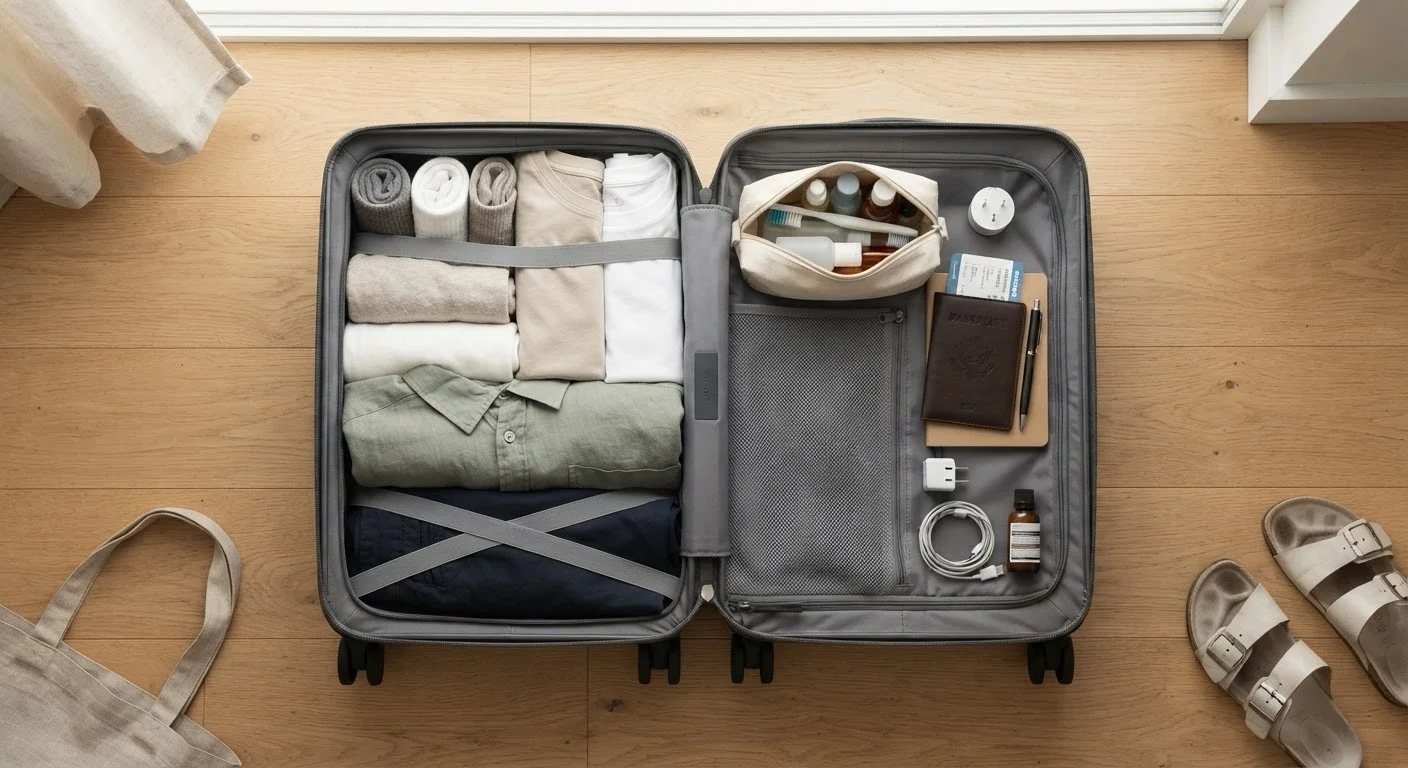
Key Takeaways
Why Packing Light Is Harder Than It Sounds
There's a reason experienced travelers talk about packing light as a skill rather than a preference. The instinct when preparing for a trip — especially an unfamiliar destination or a longer journey — is to prepare for every possibility. That instinct is natural, but it leads to bags that are heavier than they need to be and cluttered with items that never leave the bottom of the case.
Packing light isn't about deprivation. It's about making deliberate decisions so that what you carry genuinely serves the trip you're actually taking. Done well, a lighter bag means faster airport navigation, no checked-bag fees, less physical strain, and more flexibility to move spontaneously. The challenge is that it requires front-end thinking most people defer until they're standing in front of an open suitcase the night before departure.
For a broader framework on the carry-on-only philosophy, packing without leaving essentials behind offers a useful starting point. This guide goes deeper on the practical steps — the actual process of building, editing, and finalizing a bag that travels well.
What you will need
What You'll Need Before You Start
Having the right tools and mindset in place before you start packing makes the process significantly more efficient. Packing cubes, a luggage scale, and travel-sized containers aren't mandatory, but they remove common friction points. More important than any gear is having a clear picture of your trip's activities, since every packing decision should trace back to actual planned use.
Packing cubes
Compress and organize clothing into separate compartments, making it easier to find items and maximize usable bag volume.
Luggage scale
Verify your bag's weight against airline limits before you reach the check-in counter.
Travel-sized toiletry containers
Decant only the amount of product you need, eliminating the bulk of full-size bottles.
Wrinkle-resistant clothing
Reduces the need to pack or seek out an iron, saving space and time at your destination.
Once you have your bag and a rough sense of your itinerary, work through the steps below in order. Each builds on the previous one, so skipping ahead tends to produce the same overpacked result most travelers are trying to avoid.
Define the trip before you open the bag
Packing decisions should follow from your itinerary, not precede it. Write down the specific activities you'll do each day — a morning hike, a dinner reservation, a long transit day — and note the realistic weather range. This creates a concrete framework that replaces vague anxiety with a real list of needs. Without this step, packing becomes guesswork, and guesswork fills bags with duplicates and contingencies that never get used.
Choose your bag based on the trip — not the other way around
The bag you select sets a physical ceiling on how much you can bring, which is a feature, not a limitation. A 40-liter carry-on backpack forces discipline in a way a rolling checked bag simply doesn't. For trips under ten days with no formal events, a carry-on size bag is achievable for most travelers. For longer trips or trips mixing climates, weigh the real trade-offs — see our guide on carry-on vs. checked luggage to think through the decision clearly before committing to a bag size.
Build a clothing list around outfits, not individual pieces
Lay out every clothing item you're considering and check whether each piece works with at least two other items in the pile. A shirt that only pairs with one specific pair of pants is consuming space inefficiently. Neutral colors — navy, grey, tan, white, black — mix and match across contexts far more reliably than bold patterns or single-use statement pieces. Aim for a formula: one or two pairs of pants or shorts, three to five tops, one layer for warmth, and footwear capped at two pairs unless activities demand otherwise.
Audit toiletries ruthlessly
Toiletries are consistently where packing weight quietly accumulates. Decant only what you need into travel-sized containers rather than bringing full bottles. Many accommodations provide shampoo, conditioner, and soap — check before packing them. Solid toiletry formats (bar shampoo, solid sunscreen, toothpaste tablets) eliminate liquid weight and sidestep TSA's 3-1-1 rule for carry-ons. Limit your kit to what you will genuinely use every day; specialty products for unlikely scenarios can usually be purchased at your destination if needed.
Trim your electronics and accessories load
Cables, adapters, backup batteries, and charging bricks accumulate surprising weight. Take stock of what you actually used on your last trip versus what sat untouched in your bag. A universal travel adapter, one backup power bank, and a single multi-port charging brick covers the needs of most travelers. Pare cables to only those that match devices you're actually bringing. If you're carrying a laptop, evaluate honestly whether a phone or tablet could serve the same purpose for the specific trip.
Do a final weight and fit check — then edit
Before closing your bag for the last time, lift it and carry it as you would through an airport: up stairs, down a crowded aisle, overhead into a bin. If it's uncomfortable or strains your shoulder, something needs to come out. Use a luggage scale if you're near an airline weight limit. Lay out everything you've packed and identify the two or three items you're least certain about — those are your first candidates to remove. A well-packed bag should feel intentional, not crammed.
For a comprehensive view of what to confirm before you leave home entirely, the pre-trip checklist covers documents, notifications, and home security steps worth reviewing alongside your packing.
Common Packing Mistakes Worth Knowing
Even methodical packers fall into predictable traps. Understanding where things typically go wrong helps you sidestep them before you're at the airport.
Don't Pack 'Just in Case' Mindlessly
The single biggest packing pitfall is filling space with items you might use rather than items you will use. Each 'just in case' addition compounds quickly, turning a manageable carry-on into a bag you can barely lift. Challenge every speculative item: if you can buy or borrow it at your destination for a reasonable cost, leave it behind.
Another frequent mistake is packing for an idealized version of the trip rather than its realistic shape. Formal shoes for a dinner that may or may not happen, a book for a flight you'll likely sleep through, three swimsuits for a destination where you'll spend one afternoon at the beach — these are items chosen for a fantasy itinerary. Grounding your list in what you'll actually do, as outlined in Step 1, is the most reliable antidote.
Airline Size Rules Vary — Always Verify
Carry-on dimension and weight limits differ across airlines and can change without much notice. Before finalizing your bag choice, check the specific carrier's current policy on their official website. Arriving at the gate with an oversized bag can result in unexpected fees or forced checked baggage. Verifying ahead of time takes two minutes and can save real frustration.
It also helps to think about trip planning more broadly. Packing is just one component of a well-prepared journey — commonly underestimated trip planning factors covers the logistical blind spots that catch travelers off guard even when their bags are perfectly packed.
The One-Week Rule for Any Trip Length
Most experienced travelers find that a week's worth of clothing — with planned rewearing and a single wash — handles trips from seven days to several weeks. Packing for more than seven days of outfits rarely reflects how people actually dress on the road. Plan to do laundry rather than pack more.