

Key Takeaways
Why Urban Environments Demand a Different Mindset
Every city has its own rhythm — the way people move through crowded transit stations, which blocks feel lively at midnight versus which go quiet at dusk, where eye contact is normal and where it's rare. When you're a visitor, you don't have that rhythm yet. That gap between local fluency and tourist unfamiliarity is where most travel safety problems originate — not from dramatic danger, but from small moments of confusion, distraction, or misreading a situation.
The good news is that the habits that keep you safer aren't complicated. They're mostly about attention and preparation, and many of them take effect before you ever land. Thinking of urban safety as a mindset rather than a checklist makes a genuine difference: you're not trying to anticipate every scenario, but to move through the city like someone who belongs there — calm, observant, and not broadcasting vulnerability.
“The most dangerous thing a traveler can do is switch off their attention entirely. You don't need to be fearful — you need to be present.”
— Gavin de Becker, Security consultant and author of 'The Gift of Fear'
Before You Go: The Preparation Layer Most Travelers Skip
A surprising amount of in-city safety comes from work you do at home. Start with a basic neighborhood-level read of your destination. Most cities have distinct areas with varying atmospheres — tourist-heavy zones, residential pockets, commercial districts, and areas that are better avoided after dark. Travel forums, city subreddits, and government travel advisory pages (such as the U.S. State Department's country information pages) can give you a grounded sense of what's worth knowing without catastrophizing.
Write down — actually write, on paper — your accommodation address, the local emergency number (which isn't always 911 abroad), and one trusted contact's phone number. Phones die. Apps crash. A folded piece of paper in your pocket costs nothing. Download an offline map of your destination city before departure; when you're lost, mobile data is often the first thing to fail. For a deeper look at that trade-off, see our guide on offline navigation versus roaming data.
Share your itinerary — hotels, key dates, rough daily plans — with someone at home. This simple step creates a safety net that doesn't depend on your phone working or you being able to call for help.
Use Your Accommodation as a Resource
Hotel front desks, hostel staff, and vacation rental hosts often have the most current, street-level knowledge of the neighborhood. Asking them directly — which areas to avoid after dark, where to find a trustworthy cab — gets you better information than any travel app. They field these questions constantly and can give you honest, local-specific answers in under two minutes.
On the Ground: Habits That Reduce Everyday Risk
Once you're in the city, a handful of consistent habits carry most of the weight.
Carry only what you need each day, and distribute it across your person.
Keeping your wallet, phone, and cash in different places means a pickpocket who succeeds with one doesn't get everything. A money belt or an inside jacket pocket for your primary card dramatically raises the effort required for opportunistic theft.
Look up directions before you leave your accommodation, not on the street corner.
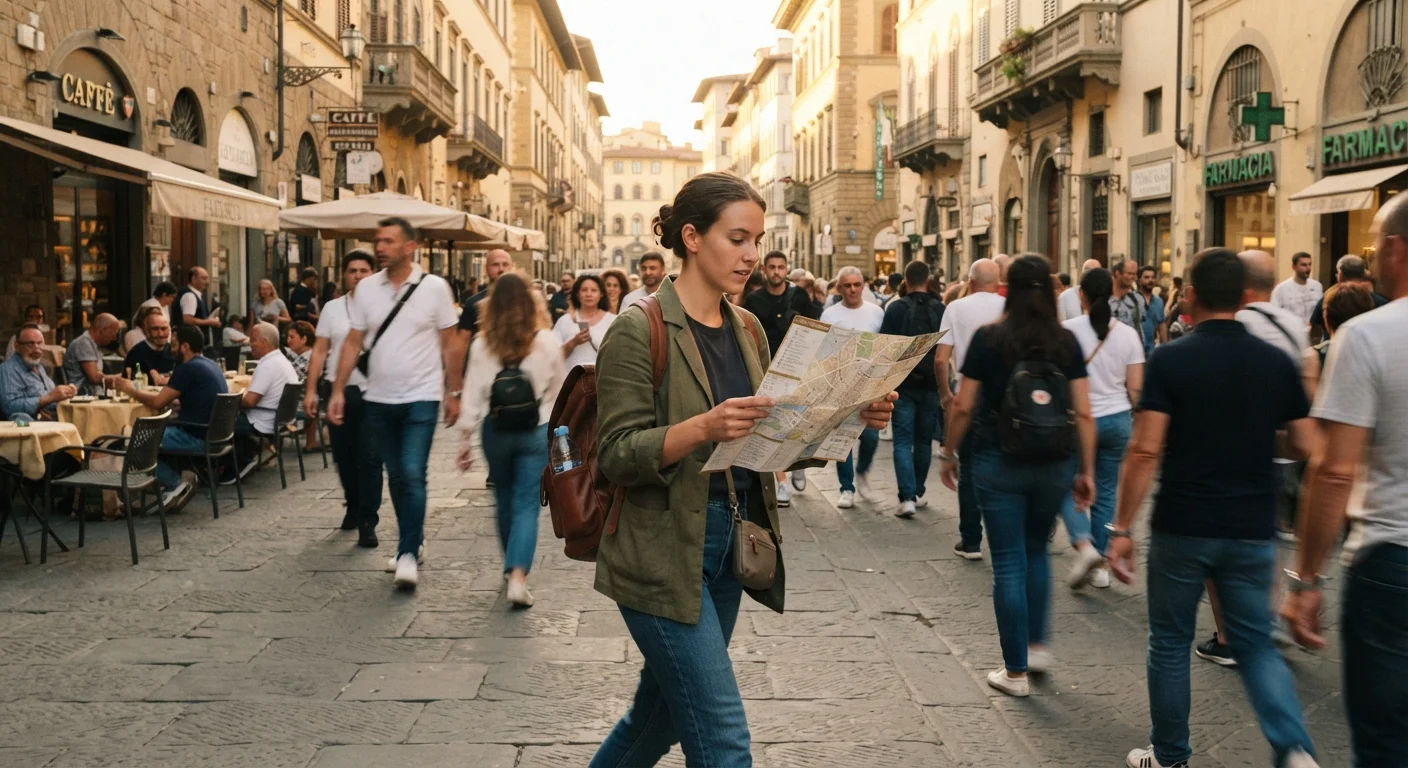
Standing on a sidewalk with your face in a phone, visibly confused about where to go, marks you as unfamiliar with the area. Reviewing your route beforehand — even just the first few turns — lets you walk with purpose.
Match your attire and behavior to the neighborhood context where possible.
Visible wealth signals — expensive cameras worn around the neck in low-tourism areas, designer bags left open at outdoor cafes — invite attention you don't want. Blending in isn't about disguise; it's about not making yourself an obvious target.
Identify your nearest exit, transit stop, or public anchor point when entering any new area.
Knowing where you'd go if you needed to leave quickly — a major hotel lobby, a busy transit station, a police station — means you're not making that decision under stress. It takes about thirty seconds and requires no special knowledge.
Use only clearly marked, official transportation options — especially at night.
Unofficial taxis and ride offers from strangers near tourist sites are a consistent source of overcharging and, occasionally, more serious incidents. Using apps with tracked rides or designated taxi ranks removes most of that risk.
Trust discomfort as information, and give yourself permission to act on it.
Many travelers override genuine unease because they feel rude, overcautious, or unsure of themselves in a new place. Security professionals consistently note that most people who are victimized had a sense that something was wrong before it happened. Your instincts are a legitimate data source.
Situational awareness is the thread running through all of them. This doesn't mean constant vigilance or suspicion toward everyone you encounter — it means not being fully absorbed in your phone while walking, noticing when a situation feels off, and trusting that instinct enough to change course without second-guessing yourself.
~80%
Of travel theft is opportunistic, not targeted
Security and travel safety researchers broadly agree that most travel-related property crime is opportunistic — meaning simple deterrence habits are highly effective.
1 in 3
Travelers who've experienced a security issue abroad
Surveys of international travelers consistently find that roughly a third report some kind of security-related incident over their travel history, most involving theft of personal items.
Digital Safety While Traveling: Often Overlooked, Genuinely Important
Physical safety gets most of the attention in urban travel advice, but digital security matters too — especially if you're handling banking, accessing work accounts, or storing photos with location data. Public Wi-Fi in cafes, hotels, and transit hubs is convenient but unencrypted, meaning data can be intercepted by others on the same network.
Avoid logging into banking or sensitive accounts on public networks. If you use a VPN (a virtual private network — software that encrypts your internet traffic), activating it on public Wi-Fi adds a meaningful layer of protection. For a grounded introduction to these concepts, our digital safety basics guide covers the essentials in plain language. You can also explore habits for keeping apps and accounts secure — practices that travel well wherever you go.
Public Wi-Fi Isn't Automatically Safe
Even password-protected public Wi-Fi in hotels and cafes can be monitored by others on the same network. This is a known and well-documented risk, not a niche concern. For day-to-day browsing it's generally low-stakes, but logging into financial accounts or entering passwords on public networks carries real exposure. See our online safety hub for practical guidance on managing this risk.
Keep your phone's screen lock active and consider enabling remote-wipe features before departure. If your device is stolen, being able to erase it remotely from another device is a meaningful safeguard for your personal data.