

Key Takeaways
Drowsy Driving
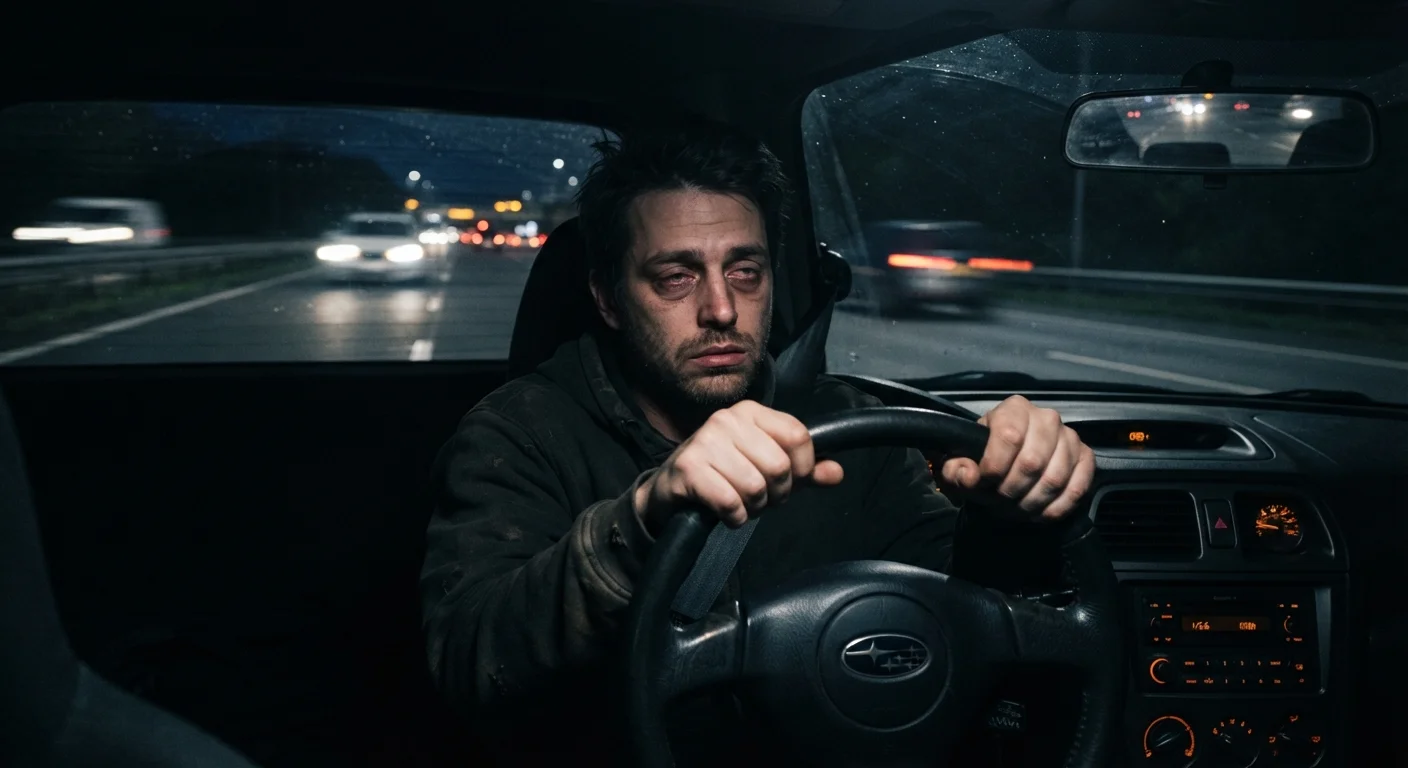
Drowsy driving refers to operating a vehicle while impaired by fatigue, insufficient sleep, or disrupted sleep patterns. It slows reaction time, reduces situational awareness, and — in its most dangerous form — causes microsleep episodes lasting several seconds at highway speed. Drivers are often poor judges of their own fatigue level, which is what makes it particularly hazardous.
Sleep deprivation of 17–19 hours produces impairment comparable to a blood alcohol concentration of approximately 0.05%, according to research from the University of New South Wales.
What Fatigue Actually Does to a Driver
Tiredness doesn't just make you feel slow — it systematically dismantles the cognitive processes that safe driving depends on. Three core functions are hit hardest: reaction time, sustained attention, and decision-making.
Even mild sleep restriction — losing just one to two hours per night over several days — measurably extends how long it takes to respond to a hazard. Since stopping distances are already unforgiving at speed (see our breakdown of stopping distances), any added delay in reaction time can be the difference between avoiding and causing a collision.
Sustained attention collapses under fatigue. Fatigued drivers show increased lane drift, miss road signs, and fail to scan intersections properly. Unlike distraction from a phone or passenger — covered in detail in our article on distracted driving sources — fatigue is invisible to onlookers and often to the driver themselves.
The most dangerous manifestation is microsleep: involuntary episodes of sleep lasting 2–10 seconds. At 60 mph, four seconds of microsleep covers roughly 100 yards with no driver input whatsoever.
~100,000
Police-reported drowsy driving crashes annually in the US
According to the National Highway Traffic Safety Administration (NHTSA), drowsy driving is considered significantly underreported in crash data.
1 in 25
Adult drivers who report falling asleep at the wheel in the past month
Based on CDC survey data on drowsy driving prevalence among US adults.
17–19 hrs
Wakefulness that produces impairment similar to 0.05% BAC
Cited in sleep and driving research; underscores why overnight drives carry a risk profile comparable to impaired driving.
Warning Signs You Should Never Ignore
The challenge with fatigue is that impairment precedes awareness. By the time you notice you're struggling, your driving may already be compromised. These warning signs indicate you should stop driving as soon as it is safe to do so:
- Frequent yawning or blinking — your body's attempt to raise alertness
- Difficulty keeping your eyes focused or heavy eyelids
- Lane drift — drifting toward lane markings or rumble strips
- Missing exits or turns you know well
- Inability to recall the last few miles driven
- Delayed responses to traffic signals or the car ahead braking
- Head nodding or jerking back after momentarily dozing
If you experience any combination of these, treat it as you would a low fuel warning — an instruction to stop, not a suggestion. Our complete safe driving guide covers how fatigue fits alongside other hazard-management habits.
The Nap-Before-Coffee Technique
If you feel fatigue setting in during a drive, pull over safely, drink a caffeinated beverage, and set an alarm for 20 minutes. Since caffeine takes roughly 20–30 minutes to reach peak effect, you'll wake up just as it kicks in — more refreshed than a nap or caffeine alone would provide. This is not a substitute for adequate pre-journey sleep, but it is a more effective short-term measure than most drivers use.
High-Risk Times, Situations, and Populations
Drowsy driving risk is not evenly distributed across the day or population. The body's circadian rhythm — its internal 24-hour clock — creates predictable windows of reduced alertness. The two highest-risk windows are 2–5 a.m. and 1–3 p.m., periods when crash data and laboratory studies align. Night driving, already more demanding due to reduced visibility, compounds these risks significantly — something worth reading about in our guide to night driving conditions.
Certain groups face elevated baseline risk:
- Shift workers — particularly those rotating between day and night shifts
- Long-haul drivers — commercial truck operators are subject to Hours of Service regulations for this reason
- People with untreated sleep disorders — obstructive sleep apnea, in particular, is associated with a substantially higher crash risk
- New parents — chronic interrupted sleep accumulates quickly
- Drivers on sedating medication — always check labels and consult a healthcare provider
Road safety myths, including the idea that willpower or stimulants can override impairment, are addressed in our article on common road safety myths.
“Drowsy driving is a serious problem in the United States. The risk, danger, and sometimes tragic consequences of drowsy driving are alarming. Drowsy driving is a public safety problem that affects all road users.”
— National Highway Traffic Safety Administration, U.S. Federal Road Safety Authority
What Actually Helps — and What Doesn't
Several popular strategies for staying alert have limited or no scientific backing:
- Opening the window or blasting cold air
- Provides brief sensory stimulation but does not address underlying impairment. Effects dissipate within minutes.
- Turning the radio up
- Similarly, a temporary distraction from fatigue symptoms — not a fix.
- Pushing through on willpower
- Sleep pressure is physiological. Determination cannot override the brain's demand for sleep.
What does help in the short term:
- A 20-minute nap — pull into a rest area or parking lot; avoid the highway shoulder. Set an alarm so you don't sleep longer and wake up groggy (a state called sleep inertia).
- Caffeine, used correctly — drink coffee or an equivalent, then take a short nap while it kicks in. Caffeine takes approximately 20–30 minutes to enter the bloodstream.
- Sharing driving duties — if traveling with another licensed driver, rotate at regular intervals.
None of these replace adequate sleep before a long journey. The only reliable prevention is starting a trip rested. If you're planning a long drive, consider how fatigue interacts with other risks like tailgating — following distance becomes even more critical when tired.