

Key Takeaways
Stopping Distance
Stopping distance is the total distance a vehicle travels from the moment a driver perceives a hazard to the moment the vehicle comes to a complete stop. It combines two phases: the distance covered during the driver's reaction time and the distance covered while the brakes are actually applied. Understanding this measurement helps drivers appreciate just how much space they need to stop safely.
Stopping distance is calculated as the sum of thinking distance (speed × reaction time) and braking distance (which increases with the square of speed, meaning doubling your speed roughly quadruples braking distance).
Two Phases, One Number
Every stopping distance figure is the sum of two distinct phases that happen in quick succession. The first is thinking distance — the ground covered from the moment your eyes register a hazard to the moment your foot reaches the brake pedal. The second is braking distance — the additional ground covered while the brakes work to bring the vehicle to rest.
Drivers often focus on braking performance, but thinking distance is equally important. At 30 mph, a driver with a typical reaction time of 1.5 seconds will travel roughly 66 feet before pressing the brake. Add braking distance, and the total stopping requirement exceeds what many drivers intuitively expect.
This two-phase reality is why safe following distance is so closely tied to stopping distance — the gap in front of you must account for both phases, not just the braking phase.
~4×
Braking distance increase when doubling speed
Because braking distance scales with the square of speed, doubling from 30 mph to 60 mph roughly quadruples the braking distance required.
1.5 sec
Average driver reaction time
The commonly cited average reaction time of 1.5 seconds means a vehicle at 60 mph travels roughly 132 feet before braking begins.
~2×
Stopping distance increase on wet roads
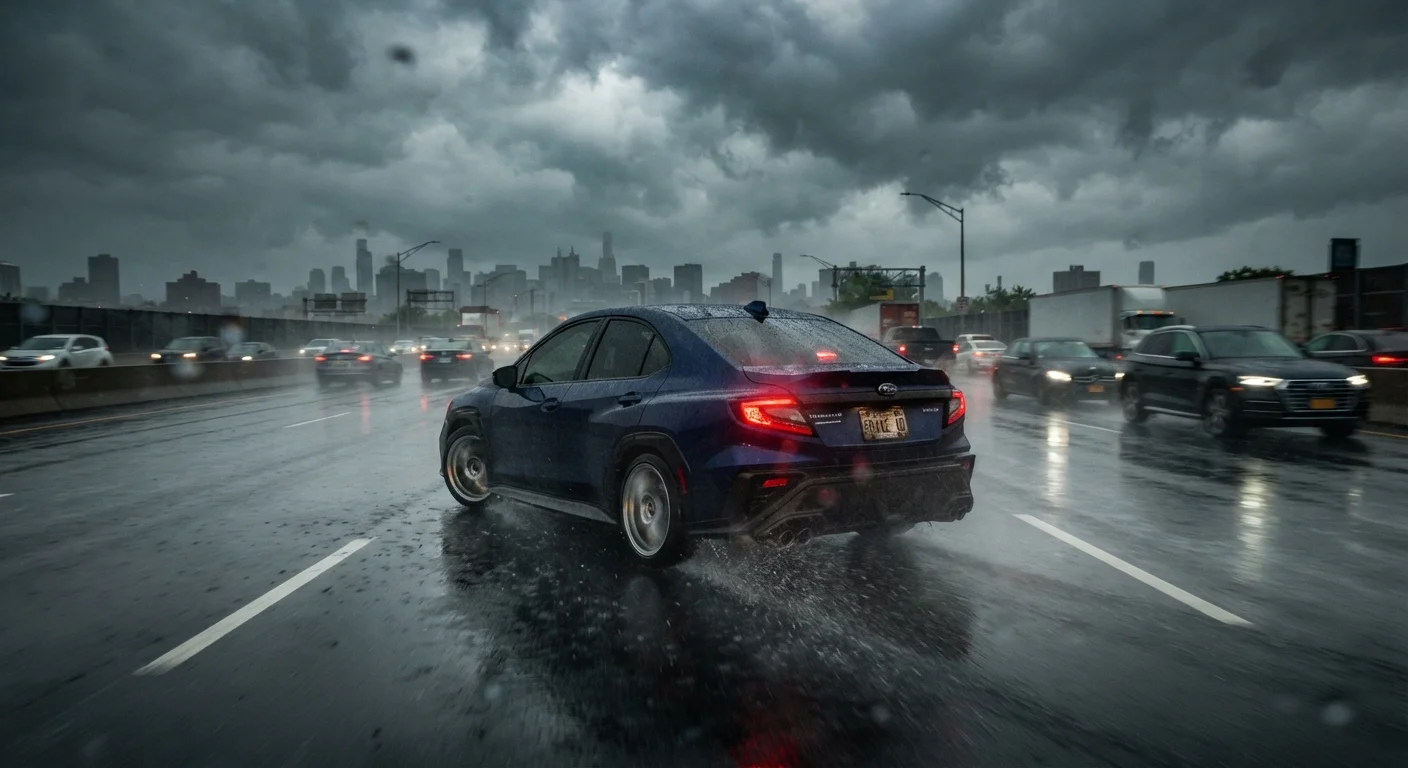
Wet road surfaces can approximately double stopping distances compared to dry conditions, according to road safety guidance widely referenced in driver education.
The Physics of Kinetic Energy
Stopping distance doesn't scale evenly with speed — it scales with the square of speed. This is because kinetic energy, the energy a moving vehicle must shed to stop, grows exponentially. A vehicle traveling at 60 mph has roughly nine times the kinetic energy of one traveling at 20 mph, not three times.
In practical terms, this means a driver who increases their speed from 30 mph to 60 mph doesn't simply double their stopping distance — they roughly quadruple their braking distance. That relationship is the core reason speed limits exist and why even small speed reductions in hazard zones carry genuine safety benefits. For a deeper look at how limits are set, see how speed limits are determined.
Brakes work by converting kinetic energy into heat through friction. Overloaded, overheated, or worn braking systems are less efficient at this conversion, directly extending braking distance — which is why brake maintenance is a genuine safety issue, not just routine upkeep.
Road Conditions and Tire Contact
The grip between tire and road surface — called friction coefficient — is the limiting factor in braking performance. On a dry asphalt road, modern tires provide strong grip. Introduce rain, ice, snow, oil, or loose gravel, and that coefficient drops sharply, extending braking distance well beyond dry-road estimates.
Wet asphalt can roughly double stopping distances. Ice can increase them by a factor of five or more. These aren't marginal differences — at highway speeds, they represent the difference between stopping before an obstacle and not stopping in time.
Adjust Your Speed Before Conditions Worsen
Don't wait until rain is heavy or roads are visibly icy to slow down. Wet roads begin reducing tire grip as soon as moisture is present, and stopping distances start increasing immediately. Reducing speed proactively — before you need to brake hard — is far more effective than reacting after traction is already compromised.
Tire condition compounds this further. Worn tread reduces the tire's ability to channel water away from the contact patch, increasing the risk of hydroplaning — where a film of water lifts the tire off the road surface, eliminating braking ability almost entirely. Tires at or near the legal tread depth minimum perform meaningfully worse than new tires in wet conditions.
Human Factors: Reaction Time and Impairment
The thinking distance component of stopping distance is entirely driven by human biology and behavior. Average reaction time under normal, alert conditions is approximately 1.5 seconds. That figure climbs with distraction, fatigue, alcohol, medication, and age-related changes in processing speed.
A driver who is tired or distracted may take 2.5 seconds or more to react — adding 50 to 60 additional feet of travel before braking begins at highway speeds. Fatigue impairs driving in ways that closely mirror impairment from alcohol, yet it's consistently underestimated by drivers.
Phone use — even hands-free — has been shown in research to delay driver response times significantly. These delays are invisible to the driver in the moment, which is precisely what makes them dangerous.
What This Means for Everyday Driving
Understanding stopping distance physics isn't academic — it translates directly into driving decisions. The key behavioral implication is following distance. If your vehicle needs 200+ feet to stop and you're 80 feet behind the vehicle ahead, no amount of skill or attention closes that gap in time. Tailgating is more dangerous than most drivers intuitively feel because stopping distances are consistently longer than intuition suggests.
Slowing down before conditions deteriorate — rather than after — is the most effective strategy. A 10 mph reduction in speed can meaningfully shorten stopping distance and buy critical extra time. For a broader framework on applying these principles across different road situations, see this complete overview of safe driving.
Vehicle loading, trailer towing, and tire inflation also affect stopping performance in ways many drivers don't account for. A fully loaded SUV stops substantially less efficiently than the same vehicle empty.