

Key Takeaways
Why Overtaking Demands More Than Confidence
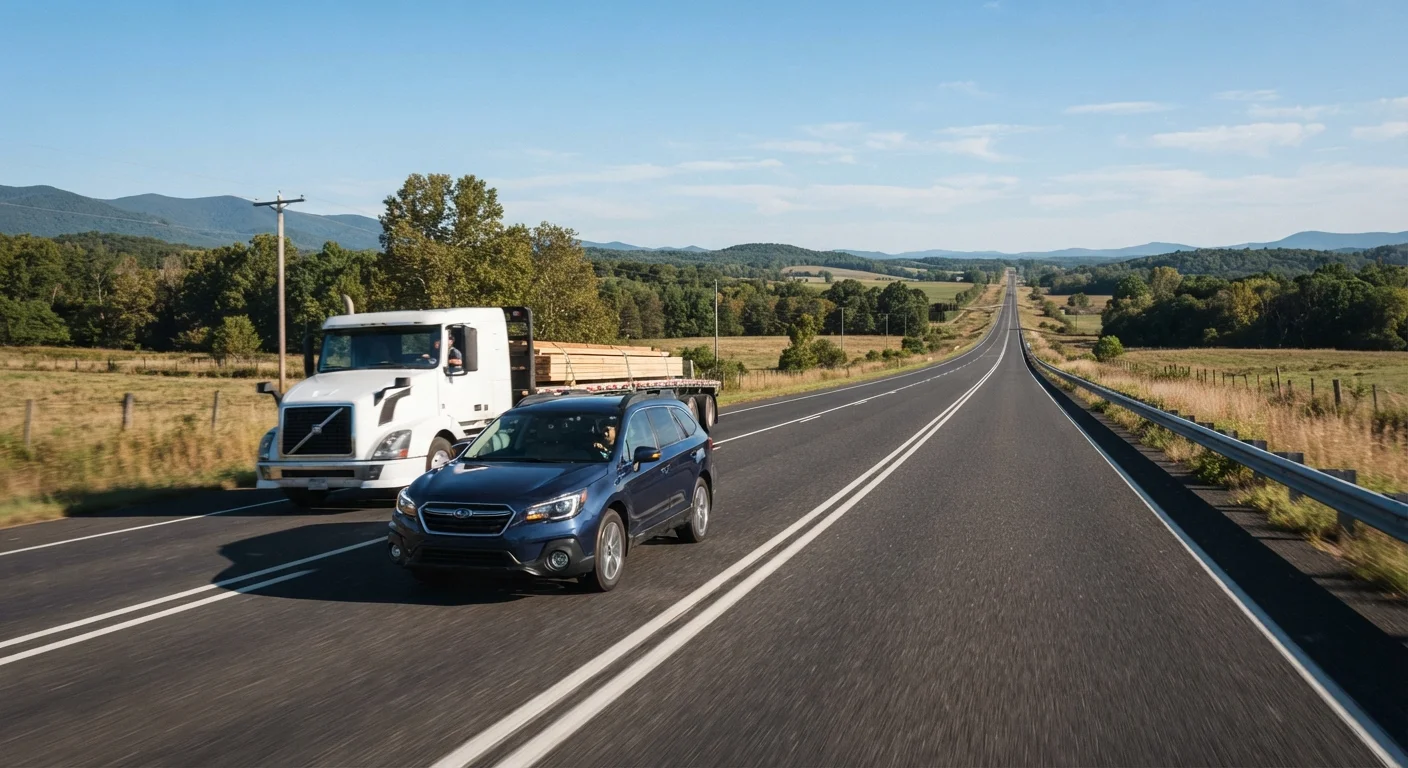
Overtaking — passing a slower vehicle on a two-lane road — is among the most demanding manoeuvres in everyday driving. Unlike lane changes on a multi-lane highway, a standard pass on a two-lane road requires you to briefly occupy the oncoming lane, which means your margin for error is measured in seconds, not minutes. Understanding what makes this manoeuvre hazardous is the first step toward doing it safely.
The core risk is the closing speed between your vehicle and any oncoming traffic. If you are travelling at 60 mph and an oncoming vehicle is also doing 60 mph, the two vehicles approach each other at a combined 120 mph. A gap that appears generous can close in under two seconds. This is why judgment — not nerve — determines whether an overtake is safe.
Road geometry compounds the challenge. Hills and curves mask oncoming traffic until it's too late to abort. For a broader look at how road type changes what's demanded of you, see our article on motorway versus urban driving habits.
Never Overtake on Blind Bends or Hills
Attempting to pass another vehicle where your forward sightline is obscured — such as on a curve or approaching a crest — is one of the leading causes of head-on collisions. Even if the road appears quiet, conditions ahead are unknown. Wait until you have a clear, unobstructed view of the road in front before committing to any overtaking manoeuvre.
How to Overtake Safely: Step by Step
Safe overtaking is a structured sequence, not a spontaneous action. Work through each stage deliberately.
Your vehicle's mirrors (side and rear-view)
Used to check for following traffic and assess the rear environment before moving out.
Turn signals
Signal your intention to move out and return to lane, communicating clearly with other road users.
Vehicle speedometer
Confirm you have sufficient speed margin to complete the pass within legal limits before committing.
Assess Whether an Overtake Is Necessary and Legal
Before anything else, ask whether the pass is worth the risk. If the vehicle ahead is travelling only slightly below your intended speed, the time saved is negligible. Confirm that road markings permit overtaking — no solid centre line on your side — and that no signs prohibit passing in the area.
Check All Mirrors and Scan Far Ahead
Use your rear-view and left side mirror to confirm no vehicle is already overtaking you from behind. Then scan as far ahead as possible — you need a clear, unobstructed view of the oncoming lane for the full distance required to complete the pass. This visible clear distance needs to account for the length of the vehicle you're passing plus your own vehicle, plus a safety buffer on each end.
Signal Your Intention Early
Activate your left turn signal (to move out) well before pulling out. This alerts the driver behind you — who may themselves be planning to overtake — and gives any oncoming driver a clearer read on your intentions. Signal for at least two to three seconds before moving.
Accelerate Decisively and Complete the Pass Efficiently
Once you commit, accelerate with purpose — hesitation extends the time you spend in the oncoming lane. Downshift if driving a manual vehicle to access peak acceleration. The pass should be completed as quickly as safely possible. Maintain awareness of the vehicle ahead in case it unexpectedly speeds up or moves left.
Return to Your Lane Safely and Re-Establish Following Distance
Signal right and move back into your lane once you can see the overtaken vehicle's headlights in your rear-view mirror — this indicates you have cleared it with sufficient room. Do not cut in sharply. Ease off the accelerator gradually to match traffic flow and re-establish a safe following gap from the vehicle you passed.
Use the Two-Second Buffer After Returning
Once you've completed the overtake and moved back into your lane, re-establish a safe following gap from the vehicle you've just passed. Pulling in too tightly immediately after overtaking is a common error that negates the benefit of the manoeuvre. See our guide on safe following distances for the right gap to maintain.
Solid White Lines and No-Overtaking Zones
Double solid centre lines or a solid line on your side of the road legally prohibit overtaking in most US states. These markings are placed where engineers have determined visibility or safety margins are insufficient. Crossing them isn't just illegal — it reflects a genuine, measured hazard. Always respect road markings regardless of how clear the road appears to you in the moment.
When the Answer Is Simply No
Knowing when to abandon or postpone an overtake is a skill in its own right. A partially committed pass where you've pulled alongside the vehicle ahead but realise the gap is closing too fast requires an immediate abort: ease off the accelerator and fall back into your lane without braking sharply, which could cause the vehicle behind to rear-end you.
Situations that should prompt you to hold back include: restricted sightlines of any kind, the presence of junctions or driveways ahead, adverse weather reducing visibility or grip, and roads where the speed limit changes shortly ahead. Impatience is a factor in a significant proportion of overtaking collisions — the urge to pass a slow vehicle often outweighs a realistic assessment of the risk involved.
The safety margin you need to overtake successfully is closely linked to how much space you maintain before you begin. Drivers who follow too closely before attempting to pass have less acceleration room and a compressed view of what lies ahead. Our article on the dangers of tailgating explains why that compressed following distance is itself a hazard.
For a comprehensive view of safe driving across every road situation, including how overtaking fits into broader road awareness, see our complete safe driving overview.