

Home & Garden

End-of-Season Garden Tidy-Up: What to Do Before Winter

Share
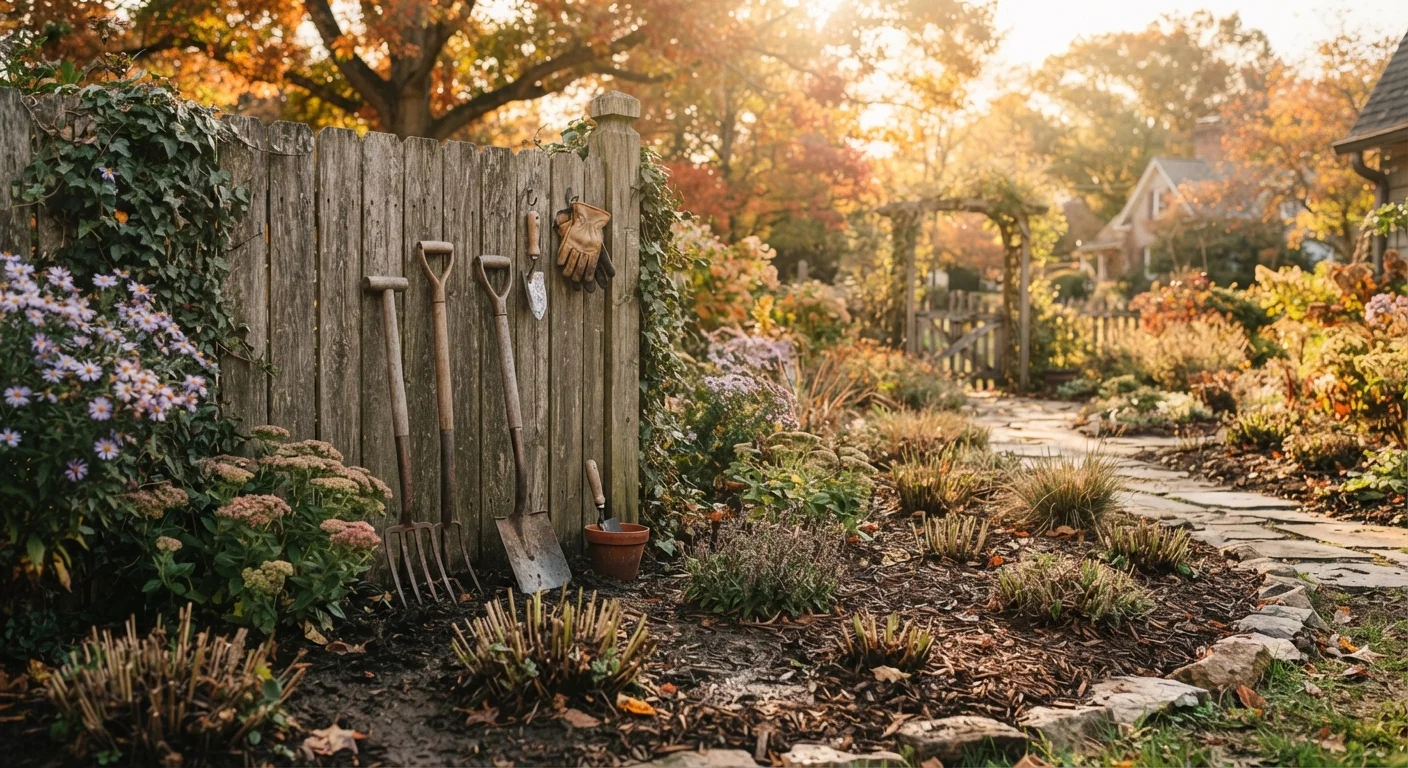
A well-tended autumn garden with cut-back plants, mulched beds, and garden tools ready for storage

Key Takeaways

Cutting back dead plant material reduces disease pressure and pest overwintering sites.
Mulching beds before the ground freezes insulates roots and retains soil moisture.
Tender bulbs like dahlias and cannas must be lifted and stored indoors in most US climate zones.
Clean and properly stored tools last significantly longer and perform better next season.
Amending soil in fall gives organic matter time to break down before spring planting.
120–240 min

Summary

22 items · 2–4 hours spread across 1–2 weekends

Why Fall Garden Cleanup Matters

The hours you spend tidying your garden before the first hard frost pay dividends for months. Decomposing plant debris harbors fungal spores, bacterial disease, and overwintering pests — clearing it away breaks those cycles before they get a foothold. At the same time, a well-mulched, properly amended bed enters winter in far better structural condition than one left to fend for itself.

This checklist walks through every major task zone: beds and borders, bulbs, the lawn edge, your tool shed, and the soil itself. Work through it in a single focused weekend or spread it across a few evenings in late fall. Either way, your future spring self will thank you.

For a broader view of how fall garden work connects to the rest of the year, see our year-round garden maintenance checklist.

Beds and Borders

Cut back dead and dying herbaceous perennials to within a few inches of the ground, bagging diseased material rather than composting it. Must
Remove all annual plants by the roots once frost has killed them; leaving root masses in place can harbor soil-borne pathogens. Must
Pull or smother persistent weeds before they set seed — a weed that seeds in fall means hundreds more plants in spring. Must
Leave ornamental grasses and seed-bearing perennials (such as echinacea and rudbeckia) standing to provide winter habitat and food for birds. Nice to have

Mulching

Apply 2–4 inches of organic mulch (shredded leaves, wood chips, or straw) over perennial beds after the ground has cooled but before it freezes hard. Must
Keep mulch a few inches back from plant crowns and woody stems to prevent rot and rodent damage over winter. Must
Use shredded fallen leaves as a free mulch alternative — run them over with a mower to speed breakdown and prevent matting. Nice to have

Bulbs

Lift tender bulbs (dahlias, cannas, gladiolus, caladiums) after the first light frost blackens foliage but before a hard freeze damages the corms. Must
Cure lifted bulbs by air-drying them in a single layer for several days, then store in a cool, dry, frost-free location in peat moss or dry vermiculite. Must
Plant spring-blooming hardy bulbs (tulips, daffodils, alliums) now — they require a cold dormancy period to bloom properly. Should
Label stored bulbs clearly by variety and color so spring planting is organized and intentional. Nice to have

Pruning and Shrubs

Remove dead, damaged, or crossing branches from deciduous shrubs; avoid heavy pruning of spring-blooming shrubs (lilacs, forsythia) or you'll cut off next year's buds. Must
Wrap young or newly planted evergreens in burlap in regions with harsh winter winds to prevent desiccation damage. Should
Prune roses back by one-third and mound soil or compost around the base for insulation in USDA zones 5 and colder. Should

Soil Preparation

Work a 2–3 inch layer of compost into empty beds to improve structure and fertility before spring planting. Should
Take a soil test if you haven't in the past two to three years; fall amendments (lime, sulfur) have all winter to integrate before spring. Should
Sow a winter cover crop (winter rye, crimson clover) in vegetable beds to protect bare soil, suppress weeds, and add organic matter. Nice to have

Tool and Equipment Storage

Clean all hand tools thoroughly — remove soil, dry completely, and apply a thin coat of oil to metal surfaces to prevent rust. Must
Drain, flush, and store garden hoses indoors or in a heated space to prevent cracking from freezing water. Must
Drain and store the gas from small engine equipment (mowers, tillers) or use a fuel stabilizer according to the manufacturer's instructions. Must
Sharpen pruning shears, loppers, and spades before storage so they are ready to use the moment spring arrives. Should

Tools and Supplies You'll Need

Before you start working through the checklist, gather everything in one place. Having the right tools at hand prevents half-finished jobs and unnecessary trips to the garage mid-task.

Required

Pruning shears

Cutting back perennial stems, deadheading, and light shrub pruning.

Required

Loppers

Removing thicker branches from shrubs and cutting back ornamental grasses.

Required

Garden fork or spade

Lifting tender bulbs and incorporating compost into bed soil.

Required

Wheelbarrow or tarp

Collecting and moving debris, spent plants, and mulch around the garden.

Required

Mulch (shredded leaves, wood chips, or straw)

Insulating plant crowns and beds from freeze-thaw cycles over winter.

Required

Peat moss or dry vermiculite

Packing material for storing lifted tender bulbs through winter.

Optional

Soil test kit or extension service mailer

Assessing pH and nutrient levels so amendments can be added before spring.

Required

Oil (linseed or mineral oil)

Coating metal tool surfaces to prevent rust during winter storage.

Soil, Compost, and Looking Ahead to Spring

The most overlooked part of any end-of-season cleanup is what you do to the soil itself. Bare, unprotected ground loses structure over winter through freeze-thaw cycles, compaction from rain, and erosion. A few targeted steps now address all three.

If you don't already have an active compost system, fall is one of the best times to start one. Fallen leaves, spent plant material, and kitchen scraps from the season all make excellent feedstock. Our guide to composting through the seasons covers exactly how to layer materials and maintain the pile over winter.

Don't Compost Diseased Plant Material

Home compost piles rarely reach the sustained temperatures needed to destroy fungal spores, bacterial pathogens, or pest eggs reliably. Any plant material that showed signs of disease — powdery mildew, black spot, rust, or blight — should go in the trash or municipal yard-waste collection, not your compost bin. Bagging it separately during cleanup takes only a moment and prevents you from inadvertently spreading the problem next spring.

Once cleanup is complete, it's also worth noting that seasonal preparation extends beyond the garden. If you want a full-household approach, our seasonal home maintenance checklist covers gutters, weatherstripping, and other fall tasks that complement your outdoor work.

Check Local Frost Dates Before You Start

The timing of nearly every task on this checklist — from lifting bulbs to applying mulch — depends on your local frost dates. Acting too early can interrupt plants still storing energy in their roots; acting too late risks cold damage to tender bulbs and bare soil. The USDA Plant Hardiness Zone Map is a free public resource that provides a solid starting point, but your local cooperative extension service can give you precise average frost dates for your specific county.

Home & Garden Editorial Team is the collective byline for our editorial team and contributor network. Articles published under this byline or an editorial pen name are researched, written, and reviewed according to our editorial standards for clarity, consistency, and independence before publication.

View all articles by Home & Garden Editorial Team →
Disclaimer: The content on this site is for informational purposes only and is not a substitute for professional advice. Always consult a qualified professional for guidance specific to your situation.