

Key Takeaways
Summary
28 items · 45 minutes–2 hours per season
Why Seasonal Maintenance Pays Off
Home maintenance isn't glamorous, but it is one of the most reliable ways to protect a major investment. Small problems — a cracked caulk line, a slow gutter drain, a worn weatherstrip — rarely fix themselves. Left unaddressed, they tend to worsen across the seasons, turning a $10 tube of caulk into a $500 water-damage repair.
A structured, season-by-season approach removes the guesswork. Instead of waiting for something to break, you're systematically looking for signs of wear at the moments they're most likely to appear. This checklist is organized by season and task category so you can move efficiently through your home each quarter.
For tasks involving your outdoor spaces, pair this guide with our year-round seasonal garden checklist to cover both the house and the yard in a single session. And if a renovation project surfaces during your inspection, check whether it needs a permit first — our guide on when DIY projects require official sign-off explains what typically triggers that requirement.
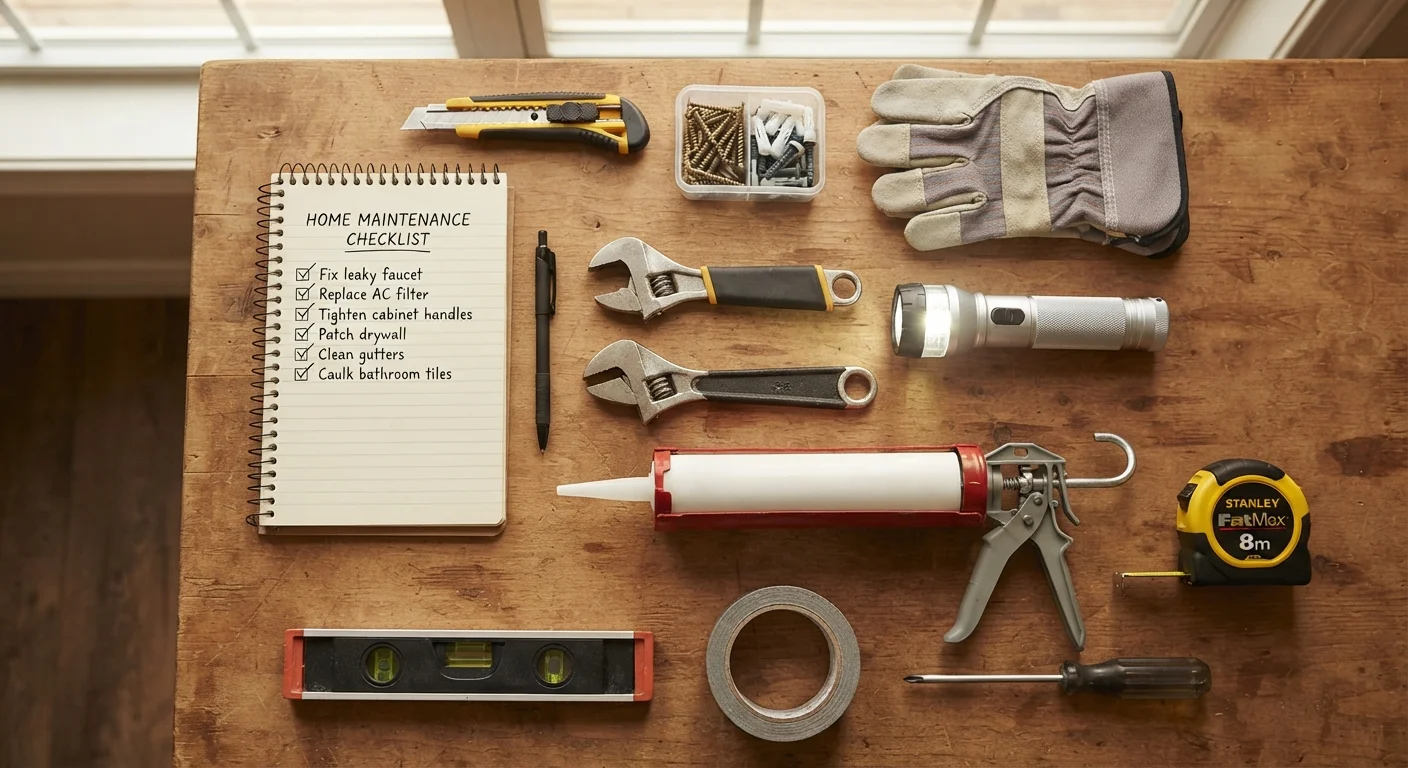
Caulk gun and exterior-grade caulk
Sealing gaps around windows, doors, and trim to prevent water intrusion.
Ladder (6-foot and extension)
Safely accessing gutters, soffits, and roof edges for visual inspection.
Flashlight or headlamp
Inspecting dark areas such as the attic, crawl space, and under sinks.
Screwdriver set and adjustable wrench
Tightening loose hardware on decks, hose bibs, and door hinges.
HVAC replacement filters
Keeping the heating and cooling system running efficiently throughout the year.
Smoke and CO detector tester spray
Verifying detector sensors are functional beyond the standard button test.
Maintenance log (notebook or digital app)
Recording inspection dates, completed tasks, and issues to monitor or repair.
How to Use This Checklist
Work through the checklist at the start of each season — ideally before extreme weather arrives. Flag items that need professional attention separately from those you can handle yourself. Items marked must are non-negotiable for safety or structural integrity; should items are strongly recommended; nice to have items add comfort and efficiency.
Electrical and Gas Work Requires a Licensed Pro
No checklist task should lead you to open an electrical panel, work on gas lines, or modify any system that your local code requires a licensed contractor to touch. If your inspection reveals a potential electrical or gas issue — unusual smells, tripped breakers that won't reset, or visible wire damage — stop and call a qualified professional. These are not DIY situations regardless of skill level.
Keep a simple maintenance log — a notebook or a shared digital document works fine — so you can track what was inspected, what was repaired, and what needs monitoring next season. This record is also useful if you ever sell the home or file an insurance claim.
Spring (March–May)
Summer (June–August)
Fall (September–November)
Winter (December–February)
Year-Round
Tasks That Always Need a Professional
This checklist covers inspections and minor maintenance that most homeowners with basic DIY confidence can handle. However, several categories should always involve a licensed, qualified professional:
- Electrical panel and wiring issues — do not attempt repairs yourself.
- Gas appliances, furnaces, and lines — annual service by a licensed HVAC technician is standard practice in most US markets.
- Structural repairs (cracks in foundation walls, sagging floors, roof decking damage) — require a structural engineer or qualified contractor assessment.
- Any work requiring a permit — check with your local building department before beginning.
Don't Skip the Professional-Only Tasks
It can be tempting to postpone furnace servicing or chimney cleaning to save money, but these are among the highest-risk deferred maintenance items in a home. A gas appliance malfunction or chimney fire can cause significant property damage or endanger occupants. Budget for these annually and treat them as non-negotiable line items.
Roof and Ladder Safety
Visual roof inspections can often be done from the ground using binoculars, or from a ladder positioned at the eaves — not by walking the roof surface. Walking on a roof without proper equipment and training creates a genuine fall risk. If you suspect roof damage that requires closer examination, contact a licensed roofing contractor.
Energy efficiency improvements often surface during seasonal checks. If you find drafts around windows, doors, or floorboards, our guide on draft-proofing your home walks through where gaps typically hide and how to seal them effectively without professional help.