

Home & Garden

Seasonal Garden Tasks: A Year-Round Maintenance Checklist

Share
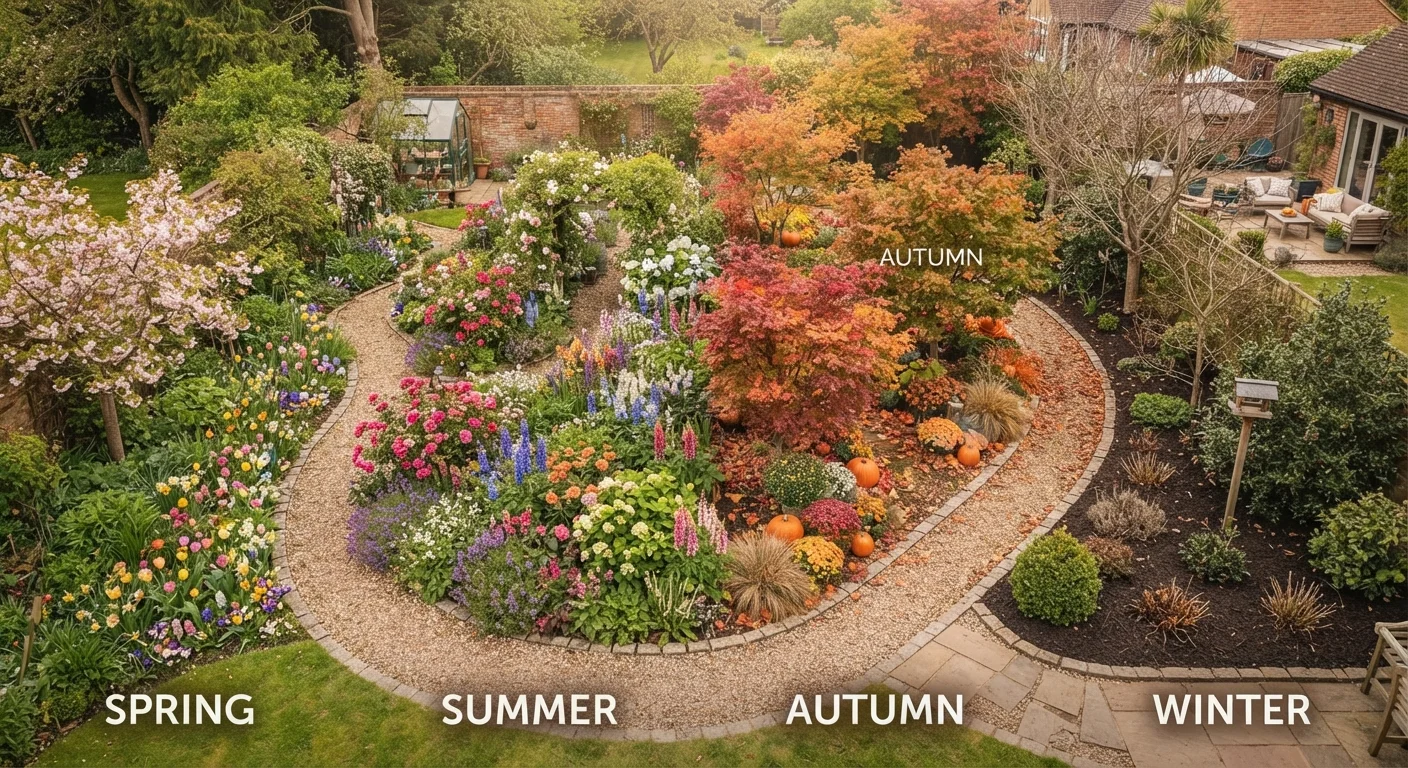
A garden showing distinct seasonal plantings from spring blooms to winter mulched beds

Key Takeaways

Consistent seasonal maintenance prevents small garden problems from becoming costly ones.
Pruning, feeding, and mulching schedules differ meaningfully by season — timing matters.
Soil health and composting underpin nearly every other garden task year-round.
Fall preparation is the most overlooked season for setting up a strong spring garden.
Many maintenance tasks can be batched by season to save time and effort.
20–40 min

Summary

24 items · 20–40 minutes to review; ongoing seasonal tasks throughout the year

Why a Year-Round Garden Checklist Works

Most garden problems — sparse blooms, leggy shrubs, compacted soil, pest outbreaks — trace back to tasks that were skipped or done at the wrong time. A season-by-season checklist turns reactive firefighting into proactive care, making each season's work lighter because the previous one set the stage.

This checklist covers the four main growing seasons as they apply to most US gardening zones. Gardeners in the South or Pacific Coast may need to shift timing, but the task sequence remains broadly consistent. Use it alongside our guide to composting through the seasons to close the loop on organic matter management.

Spring Tasks

Clear winter debris — dead leaves, broken stems, and spent mulch — from beds before new growth begins. Must
Test soil pH and nutrient levels with an inexpensive kit, then amend as needed before planting season. Must
Divide overcrowded perennials while they are just emerging to minimize root disturbance. Should
Apply a balanced slow-release fertilizer to beds and lawns once soil temperature reaches at least 50°F. Must
Prune dead or winter-damaged wood from shrubs and ornamental grasses before buds fully open. Must
Start seeds indoors for warm-season crops 6–8 weeks before your last expected frost date. Should

Summer Tasks

Apply a 2–3 inch layer of organic mulch around beds and trees to retain moisture and suppress weeds. Must
Water deeply and infrequently — typically 1 inch per week — rather than shallow daily watering. Must
Deadhead spent flowers on annuals and repeat-blooming perennials to extend the flowering period. Should
Monitor for pest and disease pressure weekly, addressing outbreaks early before they spread. Must
Side-dress heavy-feeding vegetable crops with compost or a balanced fertilizer mid-season. Should
Stake tall perennials and climbers before summer storms cause them to collapse or snap. Nice to have

Fall Tasks

Plant spring-flowering bulbs — tulips, daffodils, alliums — 6–8 weeks before the ground freezes. Must
Cut back spent perennial stems, leaving a few standing for winter wildlife habitat where appropriate. Should
Add a fresh layer of mulch over beds after the first hard frost to insulate roots through winter. Must
Dig up and store tender bulbs (dahlias, cannas, caladiums) in a frost-free location before temperatures drop below freezing. Must
Top-dress vegetable beds with compost and turn it in lightly to improve soil structure over winter. Should
Apply a slow-release lawn fertilizer formulated for fall to support root development through winter dormancy. Should

Winter Tasks

Clean, sharpen, and oil all hand tools before storing them to prevent rust and ensure readiness in spring. Must
Order seed and plant catalogues and plan next year's beds while the garden is dormant. Nice to have
Check stored bulbs and root vegetables monthly for rot or dehydration, discarding affected ones promptly. Should
Prune dormant deciduous trees and shrubs on dry days when temperatures are above freezing. Should
Review your garden journal from the previous year to identify what worked, what failed, and what to adjust. Nice to have
Maintain your compost pile by turning it periodically and adding dry carbon material to balance winter wet. Should

What You'll Need to Work Through This Checklist

Before diving into the seasonal tasks, gather the core tools and inputs you'll use throughout the year. Having these on hand prevents mid-task delays and helps you move efficiently from one job to the next.

Required

Soil test kit

Test pH and basic nutrient levels before spring planting and fall amendment.

Required

Hand pruners and loppers

Remove dead wood, shape shrubs, and cut back perennials across all four seasons.

Required

Garden fork or spade

Turn compost into beds, divide perennials, and plant bulbs without compacting soil.

Required

Mulch (wood chips, shredded bark, or straw)

Retain moisture, regulate soil temperature, and suppress weeds in summer and winter.

Required

Slow-release balanced fertilizer

Feed ornamental beds and lawns in spring and fall without risk of burning.

Required

Garden hose with adjustable nozzle or soaker hose

Deliver water efficiently at the root zone during dry summer periods.

Optional

Garden journal or notebook

Track planting dates, soil amendments, pest events, and seasonal observations for future planning.

Optional

Tool oil and sharpening stone

Maintain blades and handles during winter storage so tools are ready for spring use.

If your garden includes established trees and large shrubs, also review our detailed guide on pruning shrubs and trees correctly — poor technique can set plants back by a full season.

Avoid Pruning at the Wrong Time

Pruning spring-blooming shrubs like lilac or forsythia in fall or winter removes next season's flower buds. Always identify whether a plant blooms on old wood or new growth before reaching for your pruners. When uncertain, hold off until after flowering to prune. Incorrect timing won't kill most plants, but it can eliminate an entire year's display.

Planning Ahead and Keeping Records

A garden journal — even a simple notebook — pays dividends over time. Log what you planted, when you fertilized, where pest pressure appeared, and which areas dried out fastest. This record becomes your most reliable planning tool for next year.

If water efficiency is a growing concern in your area, pair this checklist with strategies from our guide to drought-tolerant gardening practices — especially when planning summer mulching and irrigation tasks.

Finally, don't overlook the overlap between garden prep and broader home upkeep. Our end-of-season garden tidy-up guide expands on fall tasks in detail, while seasonal home maintenance covers outdoor structures, gutters, and drainage that affect your garden beds directly.

Permits May Be Required for Tree Work

Significant pruning or removal of large trees — especially near structures, utilities, or property lines — may require a permit in many US municipalities. Some species are also protected by local ordinance. Always check with your local planning or public works department before undertaking major tree work, and hire a licensed arborist for any job that involves climbing or removing substantial limbs overhead.

Home & Garden Editorial Team is the collective byline for our editorial team and contributor network. Articles published under this byline or an editorial pen name are researched, written, and reviewed according to our editorial standards for clarity, consistency, and independence before publication.

View all articles by Home & Garden Editorial Team →
Disclaimer: The content on this site is for informational purposes only and is not a substitute for professional advice. Always consult a qualified professional for guidance specific to your situation.