

Key Takeaways
Why Timing Is Everything in Pruning
Pruning is one of the most powerful tools in a home gardener's routine — and one of the most frequently misapplied. The single biggest variable is timing, and getting it wrong doesn't just reduce flowering; it can set a plant back by a full growing season or more.
As a general rule, shrubs that bloom in spring — such as lilac, forsythia, and azalea — set their flower buds on old wood during the previous year. Pruning these in late fall or early spring removes those buds before they open. The right window is immediately after flowering, giving the plant the rest of the season to develop new bud-bearing wood.
Shrubs that bloom in summer — such as butterfly bush and rose of Sharon — flower on new wood grown in the current season. These can be pruned in late winter or early spring without sacrificing blooms. For trees, late dormancy (late winter, before buds break) is typically the preferred time for structural pruning, as wounds close quickly with the surge of spring growth and disease pressure from certain fungi is lower.
Pair pruning timing with a broader seasonal maintenance approach — our year-round garden maintenance checklist can help you schedule tasks so nothing gets missed.
Old Wood vs. New Wood: A Quick Reference
"Old wood" refers to stems that grew in a previous season; "new wood" refers to stems produced in the current growing season. Spring bloomers set buds on old wood and should be pruned right after flowering. Summer bloomers set buds on new wood and can be pruned in late winter. When in doubt, let the plant bloom first — observing when it flowers will tell you which category it falls into.
Core Techniques That Protect Your Plants
Beyond timing, how you cut matters as much as when. Poor cuts invite disease, cause dieback, and produce weak, unsightly regrowth.
Always cut to a bud, branch collar, or lateral branch — never to a random mid-point on a stem.
Cutting to a node or collar gives the wound a natural boundary to seal around. Stubs left between nodes die back, creating entry points for rot and disease that can travel into healthy wood.
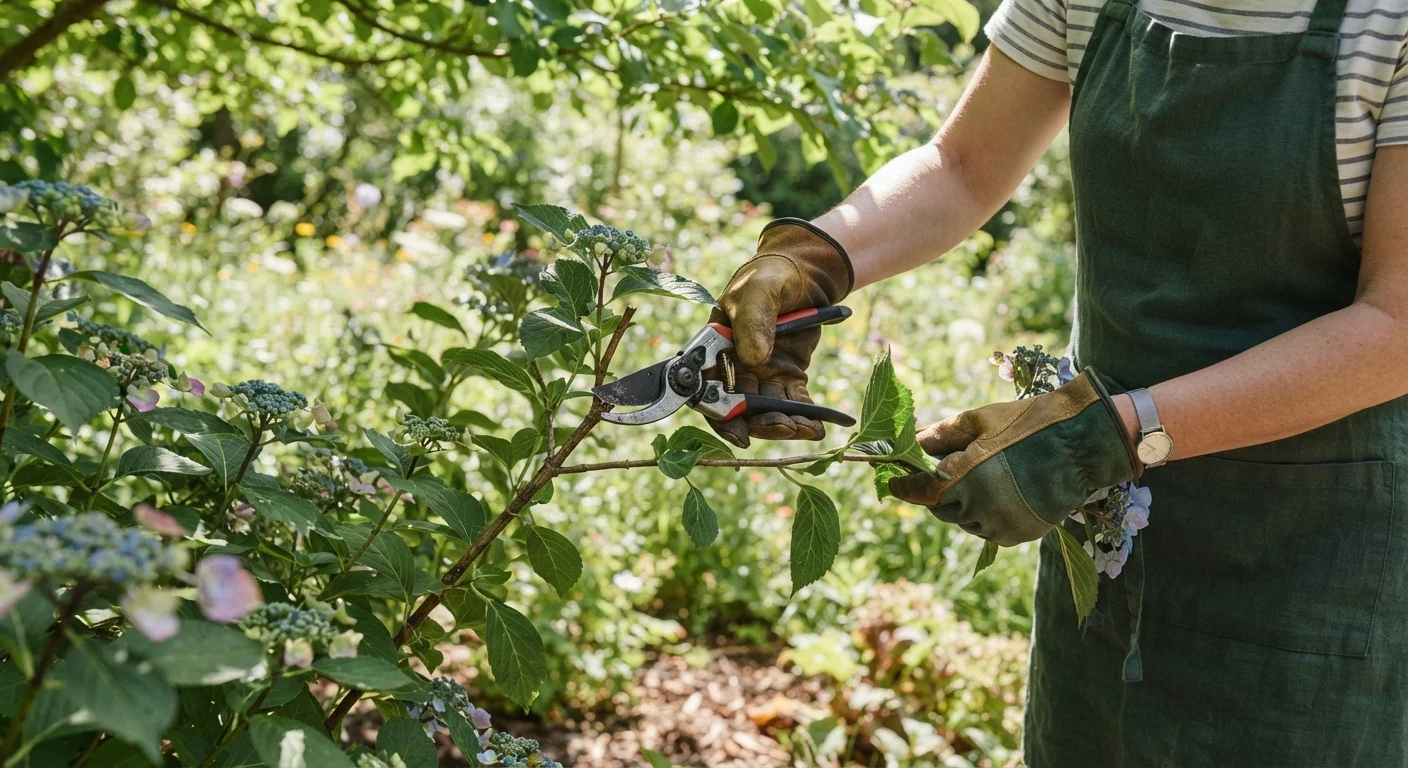
Use bypass pruners for live wood and reserve anvil-style pruners for deadwood only.
Bypass pruners make a clean slicing cut that minimises cell damage. Anvil pruners crush the stem as they close, which can impede healing on live tissue and leave ragged edges that invite disease.
Keep all cutting tools sharp and sanitise blades between plants.
Dull blades tear rather than cut, causing frayed wounds that heal slowly and are more susceptible to infection. Dirty blades can carry fungal spores or bacterial pathogens from one plant to the next.
Step back and assess the plant's overall shape before making each cut.
Reactive, cut-by-cut pruning often produces uneven or over-thinned results. Pausing to evaluate the whole canopy helps you prioritise which branches are crossing, crowding, or pulling the shape off balance.
For large limbs on trees, use the three-cut method to prevent bark tearing.
A single downward cut on a heavy limb will cause it to fall before the cut is complete, stripping bark below the branch in a long, damaging tear. The three-cut method removes weight first, then the stub cleanly at the collar.
After pruning, consider applying a layer of mulch around the base of shrubs to conserve moisture and protect roots — our guide on mulching your garden covers the best materials and methods.
Quick Wins You Can Act On Now
Not every pruning task requires a full-season plan. Several straightforward actions can improve plant health right away without risk of timing errors.
Common Pruning Pitfalls to Avoid
Even well-intentioned gardeners repeat the same mistakes year after year. Recognising these pitfalls is half the battle.
“The best time to prune a tree is when the saw is sharp — but understanding why and where you're cutting matters far more than the tool itself.”
— Extension Horticulture Programs, Land-grant university cooperative extension services across the U.S.
Topping trees — cutting back the central leader or main branches to stubs — is one of the most damaging practices still common in home gardens. It produces weak, fast-growing water sprouts, creates large wounds that rarely close cleanly, and often leads to structural instability over time. Most arborists and extension services strongly advise against it. If a tree has outgrown its space, consult a certified arborist about proper crown reduction or whether removal is a safer option.
Over-pruning is another frequent error. Removing more than about one-third of a plant's living canopy in a single season stresses the plant significantly. This can trigger excessive suckering, weaken root systems, or cause sections of the plant to die back entirely.
Skipping tool sanitation between plants spreads fungal and bacterial diseases — particularly problematic with roses, fruit trees, and plants susceptible to fire blight. Wiping blades with a diluted bleach solution or isopropyl alcohol between cuts is a simple habit that makes a real difference.
Finally, don't confuse autumn tidying with structural pruning. Cutting back shrubs hard in fall — a common impulse during end-of-season cleanup — can stimulate tender new growth right before frost, leaving plants vulnerable. Our end-of-season garden tidy-up guide explains what's safe to cut in fall and what's better left until spring.
1/3
Maximum growth to remove in one season
Horticultural guidelines consistently recommend removing no more than one-third of a plant's living canopy per pruning session to avoid stress-induced dieback.
70%+
Of tree problems traced to improper pruning
According to arboricultural research cited by university extension programs, the majority of long-term tree structural failures have roots in poor early pruning decisions.