

Key Takeaways
Start here
Choosing the Right Site
Next
Preparing Your Soil
Then
Deciding What to Grow
When you're ready
Planting, Watering, and Early Care
Final step
Harvesting and What Comes Next
Choosing the Right Site
Site selection is the single most consequential decision you'll make. Get this right and almost everything else becomes easier.
Sunlight: Most fruiting vegetables — tomatoes, peppers, cucumbers, squash — require a minimum of six to eight hours of direct sun per day. Leafy greens and root vegetables tolerate four to six hours, making them better choices for partially shaded yards.
Drainage: Avoid low spots where water pools after rain. Roots sitting in waterlogged soil quickly develop rot. If drainage is poor, a raised bed is often the most practical fix.
Proximity to water: You'll water frequently, especially in summer. Placing your garden within reach of a hose or rain barrel saves significant time and effort over a full season.
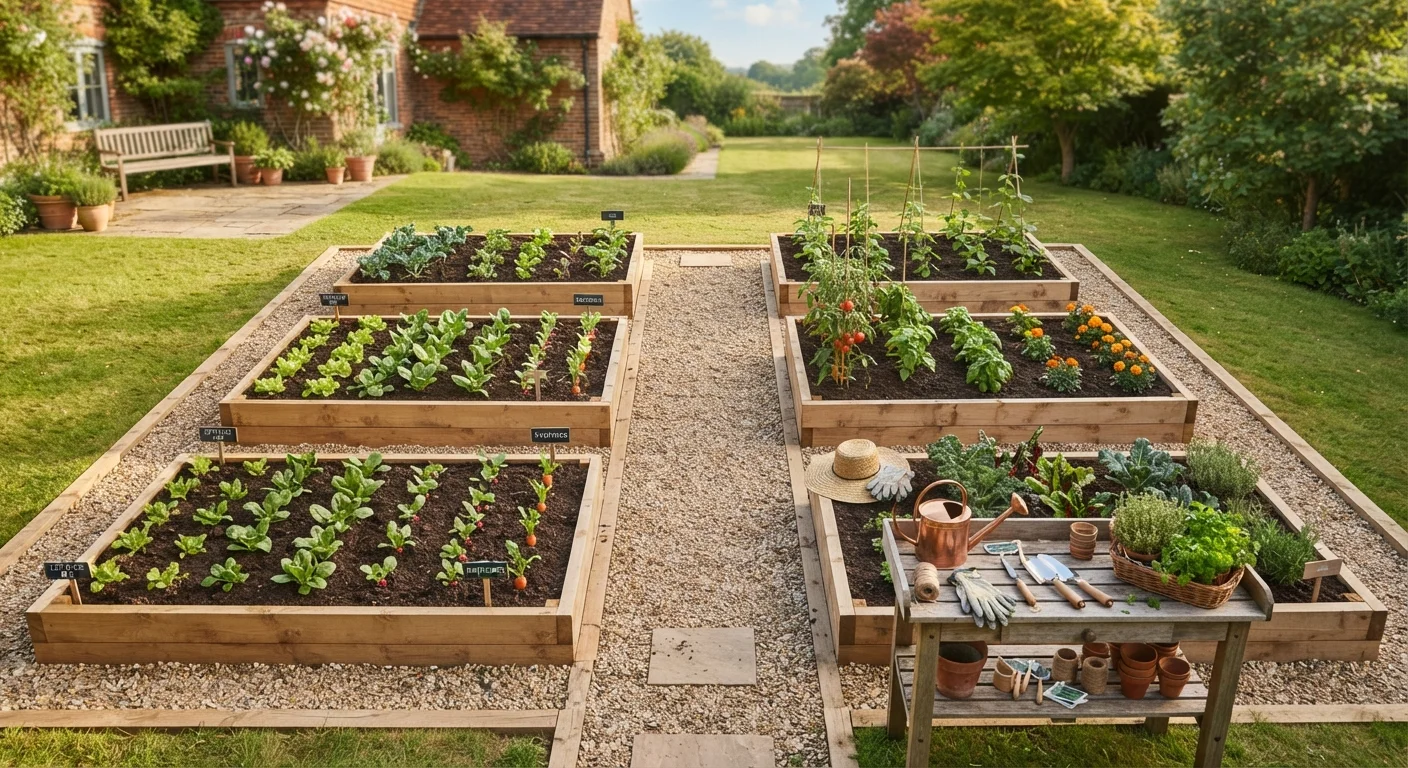
Start small: A 4×8 foot raised bed or a modest 10×10 foot in-ground plot is genuinely enough for a first garden. Overambitious plots are one of the most common reasons beginners burn out. If you're working with a patio or balcony, our guide to container gardening on patios and terraces covers how to grow successfully without any ground space at all.
Check Before You Dig
Before breaking ground on a new garden bed, call 811 (the US national call-before-you-dig number) to have underground utilities marked. This is a free service and an important safety step. Also check whether any local ordinances or HOA rules affect where or how you can garden on your property.
Preparing Your Soil
Healthy vegetables grow in healthy soil. Before planting anything, invest time in understanding and improving what you have.
Test your soil: Inexpensive soil test kits are available at most garden centers, and many state Cooperative Extension Services offer lab testing for a nominal fee. A test reveals pH and nutrient levels so you can amend intelligently rather than guessing.
Amend generously: Work two to four inches of compost into the top eight to twelve inches of soil before planting. Compost improves drainage in heavy clay soils, increases water retention in sandy soils, and feeds soil biology that supports plant roots.
Avoid compaction: Never work soil when it's wet — squeezing it into a ball that holds its shape means it's too moist. Compacted soil restricts root growth and drainage. Raised beds sidestep this problem because you're never walking on the growing area.
Soil pH
A measure of how acidic or alkaline your soil is, rated on a scale of 0–14. Most vegetables prefer a slightly acidic to neutral range of 6.0–7.0.
Compost
Decomposed organic matter — such as food scraps and yard waste — used to enrich soil with nutrients and improve its structure.
Frost date
The average calendar date when your area experiences its last spring freeze or first fall freeze, used to time planting of temperature-sensitive crops.
Direct sowing
Planting seeds directly into the garden bed rather than starting them indoors first. Crops like beans, carrots, and radishes are typically direct-sown.
Succession planting
Planting the same or different crops in intervals throughout the season so harvests are spread out rather than all arriving at once.
Mulch
A material — straw, wood chips, or shredded leaves — spread over soil around plants to retain moisture, suppress weeds, and regulate temperature.
Deciding What to Grow
Choose vegetables your household actually eats. Growing a crop nobody wants is discouraging, even when it succeeds.
Beginner-friendly crops to consider:
- Radishes — ready in as few as 25 days; great for impatient first-timers
- Lettuce and salad greens — grow fast, tolerate partial shade, and can be harvested leaf by leaf
- Green beans — sow directly into warm soil; bush varieties need no staking
- Zucchini — prolific and forgiving; one or two plants feed a family
- Cherry tomatoes — more reliable than large-fruited varieties for beginners
Work within your zone: Vegetable planting is governed by frost dates. Warm-season crops like tomatoes go in only after your area's last expected frost. Cool-season crops like spinach and kale can be planted weeks earlier and again in fall. The USDA Plant Hardiness Zone Map and your local extension office are the most reliable references.
Pick Two or Three Crops for Year One
Limiting yourself to two or three vegetable types in your first season makes care routines simple and lets you really learn each plant's needs. Once you've had success, adding variety in subsequent seasons feels natural and achievable rather than overwhelming.
Planting, Watering, and Early Care
Once your site is prepared and your crop list is set, the hands-on work begins.
Seeds vs. transplants: Starting from seed is economical and gives you access to more variety options. Transplants — young plants purchased from a nursery — skip the germination stage and are easier for beginners. Many gardeners use both: direct-sow beans and carrots, use transplants for tomatoes and peppers.
Spacing matters: Crowded plants compete for light, water, and nutrients, and have worse air circulation — a contributing factor in many fungal diseases. Follow spacing recommendations on the seed packet even when seedlings look tiny.
Watering well: Aim for one inch of water per week, delivered at soil level rather than overhead. Drip irrigation and soaker hoses are efficient options; if hand-watering, direct the flow at the base of each plant. Water deeply and less frequently rather than shallowly every day.
Mulch: A two-to-three-inch layer of straw, shredded leaves, or wood chips around plants retains moisture, suppresses weeds, and regulates soil temperature — a simple step with meaningful returns.
Harvesting and What Comes Next
Regular harvesting isn't just rewarding — it actively encourages plants to keep producing. Leaving mature vegetables on the plant signals it to slow down or stop setting new fruit.
Harvest at peak: Pick zucchini when it's six to eight inches long, beans before the pods swell, and tomatoes when fully colored and slightly soft to the touch. Most crops reveal ripeness through a combination of color, size, and firmness.
Keep records: Note what you planted, when you planted it, what worked, and what didn't. A simple notebook or phone note is enough. These observations become invaluable when planning next year's garden.
Plan for succession: As early crops like lettuce finish, replant the space with a second round of the same or a different crop. Succession planting keeps beds productive across the whole growing season.
As your confidence grows, you may want to expand your growing space, try new crops, or extend the season with cold frames. If space is still limited, container gardening for small outdoor spaces offers practical strategies for growing more with less footprint.
USDA Plant Hardiness Zone Map
The standard reference for determining which plants are likely to survive winter in your location, based on average annual minimum temperatures across the US.
Cooperative Extension Service
Every US state has a land-grant university extension service offering free or low-cost soil testing, local planting calendars, and region-specific vegetable gardening guidance.
Soil Test Kit
A basic soil test kit helps you measure pH and key nutrient levels before planting so you can amend your soil with confidence rather than guesswork.