

Key Takeaways
Why Rental Decorating Requires a Different Approach
Styling a home you rent presents a specific creative challenge: you want a space that feels genuinely yours, but you're working within boundaries set by someone else's property. The good news is that most of what makes a room feel comfortable and personal — light, texture, color, proportion — can be achieved without touching a wall with a paintbrush or a drill. The key distinction is between structural changes (paint, fixtures, built-ins) and surface styling (furniture, textiles, lighting, art). Renters have full creative control over the latter.
Understanding those limits also protects your finances. Security deposit disputes are one of the most common landlord-tenant conflicts, and unauthorized alterations are a leading cause. For a broader perspective on which home changes are worth attempting and which carry hidden costs, the renovation myths article is a useful reference — even for renters thinking about what not to do.
What you will need
Step-by-Step: Styling Your Rental
The following steps walk you through a deposit-safe decorating process, from lease review through finished styling. Work through them in order — particularly the first step — to avoid costly mistakes. The room-by-room décor audit is a helpful companion once you've completed these steps, helping you spot gaps and proportion problems in each finished space.
Removable peel-and-stick wallpaper
Adds pattern and color to walls without adhesive residue or paint — peels away cleanly when you move out.
Command strips and hooks
Hang artwork, mirrors, and lightweight shelves without drilling into walls.
Large area rug
Covers unappealing flooring and visually anchors a seating or dining area.
Freestanding floor lamp
Adds layered ambient or task lighting independent of fixed ceiling fixtures.
Curtain tension rod
Hangs curtains without drilling brackets into walls or window frames.
Furniture risers
Elevates low furniture to improve proportion and create visual breathing room in a space.
Read your lease and document the space
Before buying a single thing, read your lease from start to finish. Note any clauses about alterations, painting, hanging items, or flooring. Take dated photos of every room — walls, floors, fixtures — as your move-in record. This protects your deposit and tells you exactly where the boundaries are.
Define your style direction before spending
Rental decorating on a budget works best with intentional choices. Decide on a cohesive color palette — typically two to three complementary tones — and a general aesthetic before purchasing anything. Impulse buys in conflicting styles waste money and clutter a space. If you're unsure where your taste lands, the guide to maximalist vs. minimalist decorating can help you identify your natural style baseline.
Address walls with reversible treatments
Walls are the biggest visual surface in any room, and blank off-white paint is the most common rental complaint. Removable peel-and-stick wallpaper is your most effective tool here — modern versions hold reliably, remove cleanly, and come in patterns from subtle textures to bold geometrics. Gallery walls hung entirely with damage-free adhesive strips are another strong option. Group frames in odd numbers and plan the layout on the floor first before committing.
Layer rugs, textiles, and soft furnishings
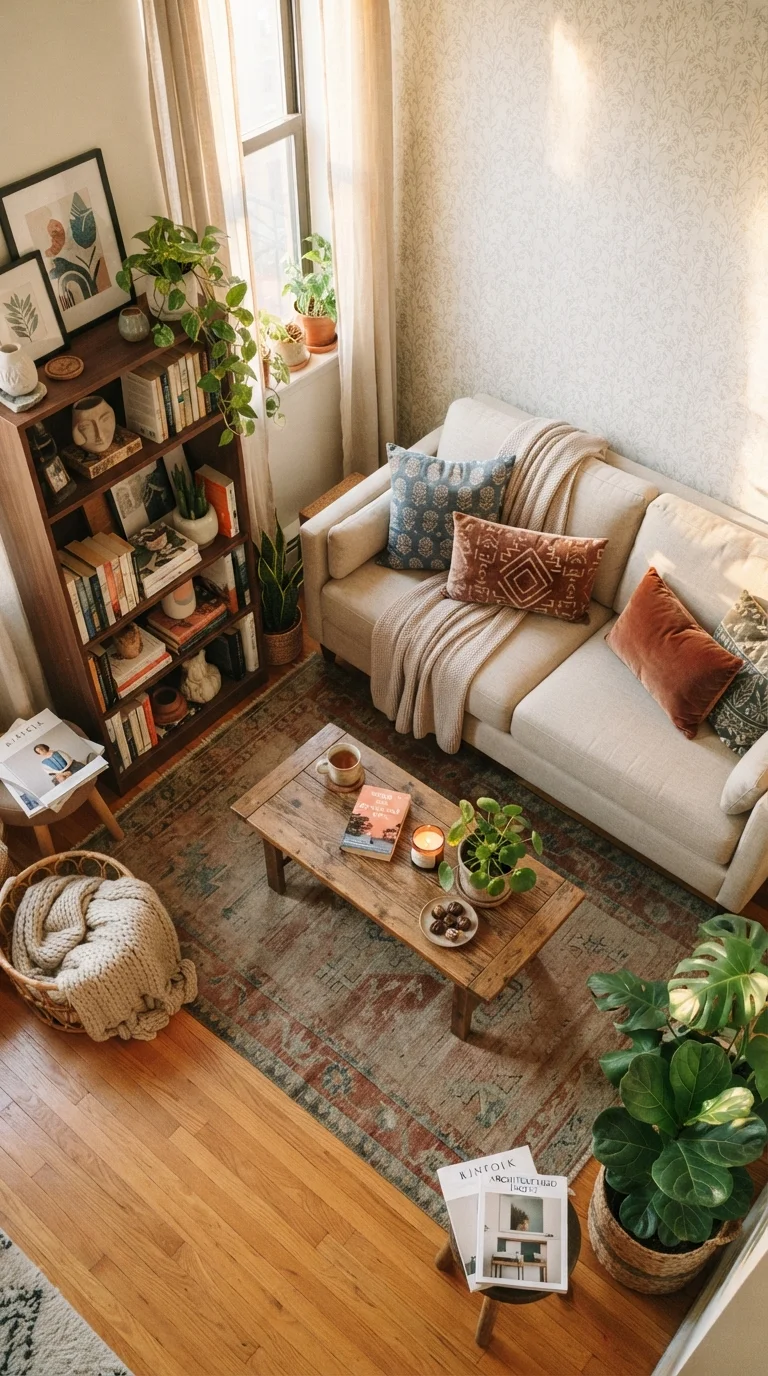
Rugs are one of the most impactful and entirely reversible changes you can make. A large area rug grounds a seating arrangement, softens hard flooring, and introduces color or pattern. Layer a smaller accent rug on top for texture. Add throw pillows, blankets, and curtains in complementary fabrics. Curtains in particular can transform a room's sense of scale — hang them from tension rods or adhesive rod brackets to avoid drilling. Choose panels that extend from near the ceiling to the floor to make ceilings feel taller.
Use freestanding furniture to shape the space
Freestanding bookshelves, room dividers, and storage units do what drilling cannot — they define zones, add vertical interest, and travel with you when you leave. A tall bookcase can make a low ceiling feel higher. A well-arranged shelf becomes a focal point in its own right; see the guide to styling a bookshelf for practical arrangement advice. Use furniture placement rather than walls to separate a living area from a dining or work zone.
Layer in lighting beyond the ceiling fixture
Most rental ceiling fixtures provide flat, unflattering overhead light. Supplement them with floor lamps, table lamps, and LED strip lights (which attach without damage) to create warmth and depth. Aim for at least three light sources in each main room — ambient, task, and accent. Dimmer plug-in adapters can give you more control over existing fixtures without any electrical work.
Think in Layers, Not Individual Pieces
The most visually satisfying rental interiors work because elements are layered — a rug under furniture, curtains that frame a window already dressed with blinds, a lamp beside a sofa rather than relying solely on overhead light. Each layer adds depth and warmth. When a room feels flat, adding one more well-chosen layer often solves it more effectively than replacing what's already there.
Finishing Touches That Make a Space Feel Lived-In
Once the major elements are in place, small details close the gap between a styled space and a home. Plants — even low-maintenance varieties like pothos or snake plants — add organic life that no furniture can replicate. A consistent scent from a candle or diffuser creates sensory continuity. Personal objects (travel finds, ceramics, framed prints) on shelves and surfaces give a room its character. If you're starting from scratch in a new place, the decorating from scratch guide offers a grounded room-by-room framework for prioritizing what to address first.
Beware of 'Damage-Free' Claims
Many adhesive hooks, strips, and wallpapers are marketed as residue-free, but results vary significantly depending on wall paint type, age, and surface texture. Always test a small area first and follow removal instructions precisely. If a product does cause damage, document it and address it honestly with your landlord rather than attempting a concealed repair — transparency tends to yield better outcomes in deposit negotiations.