

Key Takeaways
Start here
Before You Buy a Single Thing
Next
The Living Room: Where to Anchor the Home
Then
The Bedroom: Function First, Style Second
When you're ready
The Kitchen and Bathroom: Small Touches, Big Impact
Finally
Pacing Yourself: The Long Game of Decorating
Before You Buy a Single Thing
Moving into a first home carries enormous temptation to fill every room immediately. Resist it. The most common decorating mistake is purchasing furniture impulsively, before you've lived in the space long enough to understand how you actually use it.
Start with two things: a simple budget and a rough priority list. For budgeting help, the first budget guide lays out how to approach this from scratch. Once you know what you can realistically spend, break it down by room and category — furniture, lighting, textiles, and decorative items.
Next, take stock of what you already own. Hand-me-down furniture, inherited kitchenware, and even moving boxes can serve as temporary stand-ins while you figure out what you genuinely need. This approach reduces waste and gives you time to develop a clearer sense of your own style before committing.
Anchor piece
A single dominant item — often a sofa, bed, or dining table — around which the rest of a room's layout and décor is organised.
Layering
Building up a room's look gradually by adding textiles, lighting, and accessories on top of a functional furniture base.
Scale
The size of a piece of furniture relative to the room and to other furniture around it. Good scale means nothing looks too large or too small for its setting.
Accent piece
A decorative or secondary item — such as a side table, throw pillow, or wall art — that adds personality without being structurally essential.
Traffic flow
The natural paths people walk through a room. Good furniture arrangement keeps these paths clear and unobstructed.
The Living Room: Where to Anchor the Home
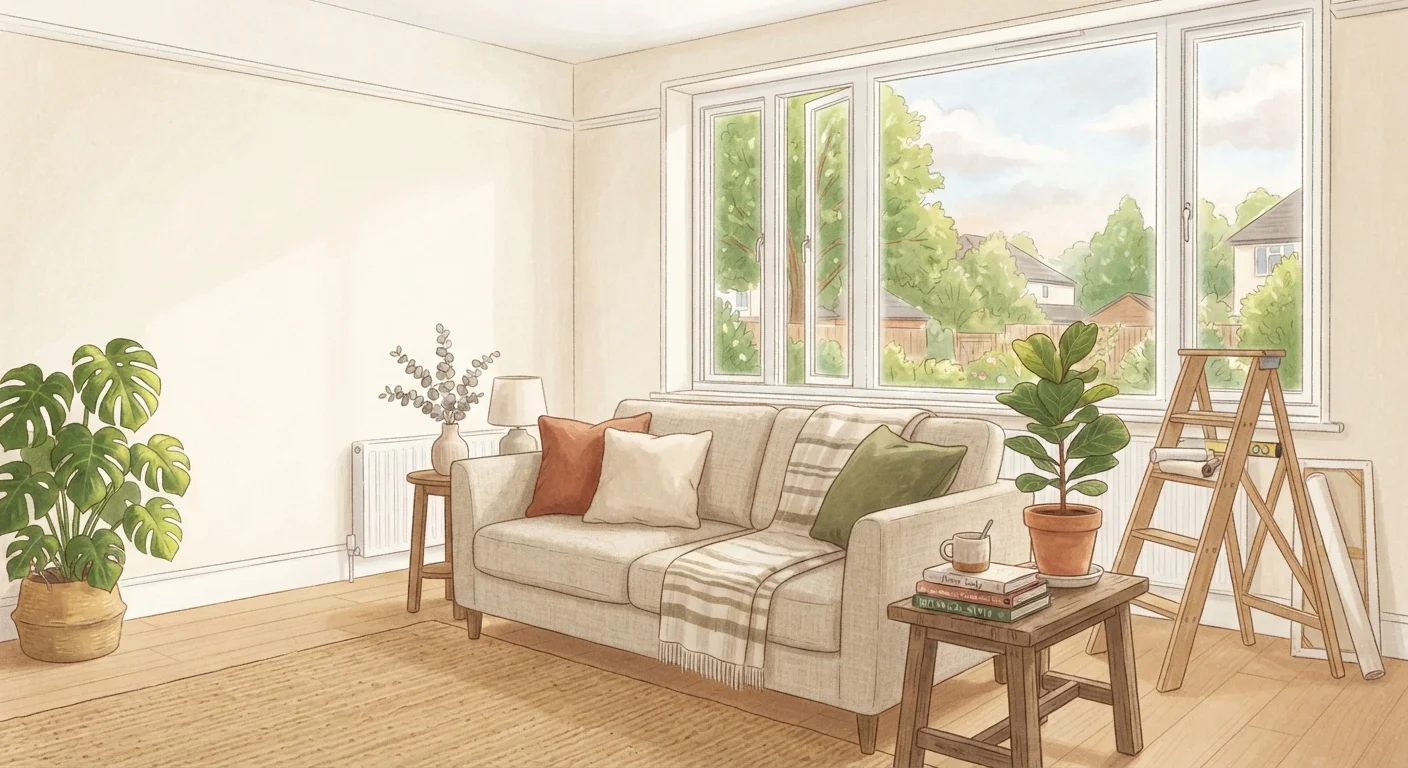
The living room is typically the first room guests see and the one you'll use most for everyday relaxation. Anchor it around a single dominant piece — usually a sofa — then build outward from there.
Choose a sofa scale that suits the room's footprint. A sofa that's too large creates congestion; one that's too small looks lost. As a rough guide, leave at least 18 inches between the sofa and a coffee table for comfortable movement. Once your sofa is placed, use a rug to define the seating zone — it visually unifies the space even before art or accessories arrive.
Lighting is the most underestimated element in a first home. Overhead fixtures alone create a flat, institutional feel. Add at least one floor lamp or table lamp to create warmth at eye level. From there, layer in textiles — throw pillows, a blanket, curtains — which add softness and colour without large expense.
Start with Paint Before Furniture
If you have any flexibility to paint walls before moving furniture in, take it. Paint is one of the most cost-effective ways to set a room's mood, and it's far easier to apply before sofas, rugs, and shelving units are in the way. Even a single painted accent wall can dramatically shift how a room feels.
If you're trying to clarify your personal aesthetic, the guide to maximalist vs. minimalist decorating is a useful starting point. And when you're ready to add wall art, planning a gallery wall before you pick up a hammer saves time and wall damage.
The Bedroom: Function First, Style Second
A good night's sleep depends significantly on your bedroom environment, which makes this room a genuine priority despite often being invisible to guests. Invest in a quality mattress first — it's the piece of furniture you'll use every single night.
Once your bed is sorted, focus on light control. Blackout curtains or blinds make an immediate, practical difference to sleep quality. From there, consider storage: adequate wardrobe space or a dresser reduces clutter, which in turn reduces the low-level stress that a disorganised room creates.
Style choices in the bedroom can develop gradually. A coordinated bedding set, a bedside lamp, and a few personal objects are enough to make a bedroom feel genuinely yours without rushing toward a finished look. The interior design glossary can help you understand the terminology you'll encounter when shopping or planning.
You Don't Need a 'Theme'
Many first-time decorators feel pressure to commit to a cohesive design theme — Scandinavian, industrial, coastal — from the outset. In reality, most well-loved homes are a mix of styles that evolved naturally over time. Focus on what makes each piece feel right to you rather than what fits a label.
The Kitchen and Bathroom: Small Touches, Big Impact
Kitchens and bathrooms are often structurally fixed — you typically can't move the sink or change the cabinet layout without significant expense and, in many cases, permits. But small styling decisions still matter considerably in how these rooms feel to live with.
In the kitchen, open shelving is one option for adding personality, though it comes with real trade-offs. The honest guide to open shelving covers what to expect before you commit. Textile choices — a dish towel, a small rug near the sink, a window treatment — are low-cost ways to bring warmth into what is often a hard-surfaced room.
In the bathroom, consider plants that tolerate humidity (such as pothos or peace lilies), a cohesive set of towels, and considered storage solutions. If you're renting and want to make changes without risking your deposit, styling a rented home offers reversible ideas for both rooms.
Know When to Call a Professional
Decorating decisions like painting, soft furnishings, and accessorising are well within DIY range. However, any work that touches your home's plumbing, electrical systems, or structural walls — even in kitchens and bathrooms — typically requires permits and a licensed contractor. Cutting corners on regulated work can create safety hazards and complications when you sell or insure the home.
Pacing Yourself: The Long Game of Decorating
A home doesn't need to be finished. The pressure to have every room styled and complete from day one leads to rushed decisions and purchases you'll later regret. Most people who are happy with their homes built them gradually over months or years.
Set yourself a loose timeline: focus on essentials in the first month, tackle one accent room every few weeks, and leave decorative finishing touches until you have a clearer sense of what you love. Use a room-by-room décor audit once you've settled in to identify what's actually holding each space back.
If you want to introduce natural textures as your rooms develop, comparing natural materials like wood, linen, and rattan can help you match material choices to your lifestyle and aesthetic. Above all, give yourself permission to live in the home before you decide it's finished.