

Key Takeaways
The Island That Rewrites Your Itinerary
Most travelers arrive on New Zealand's South Island with a list of places they want to see: Milford Sound, the Remarkables, Aoraki/Mount Cook, the Marlborough wine region, Kaikōura. The list looks manageable on a screen. Then they open a map with actual driving times, and the itinerary quietly falls apart.
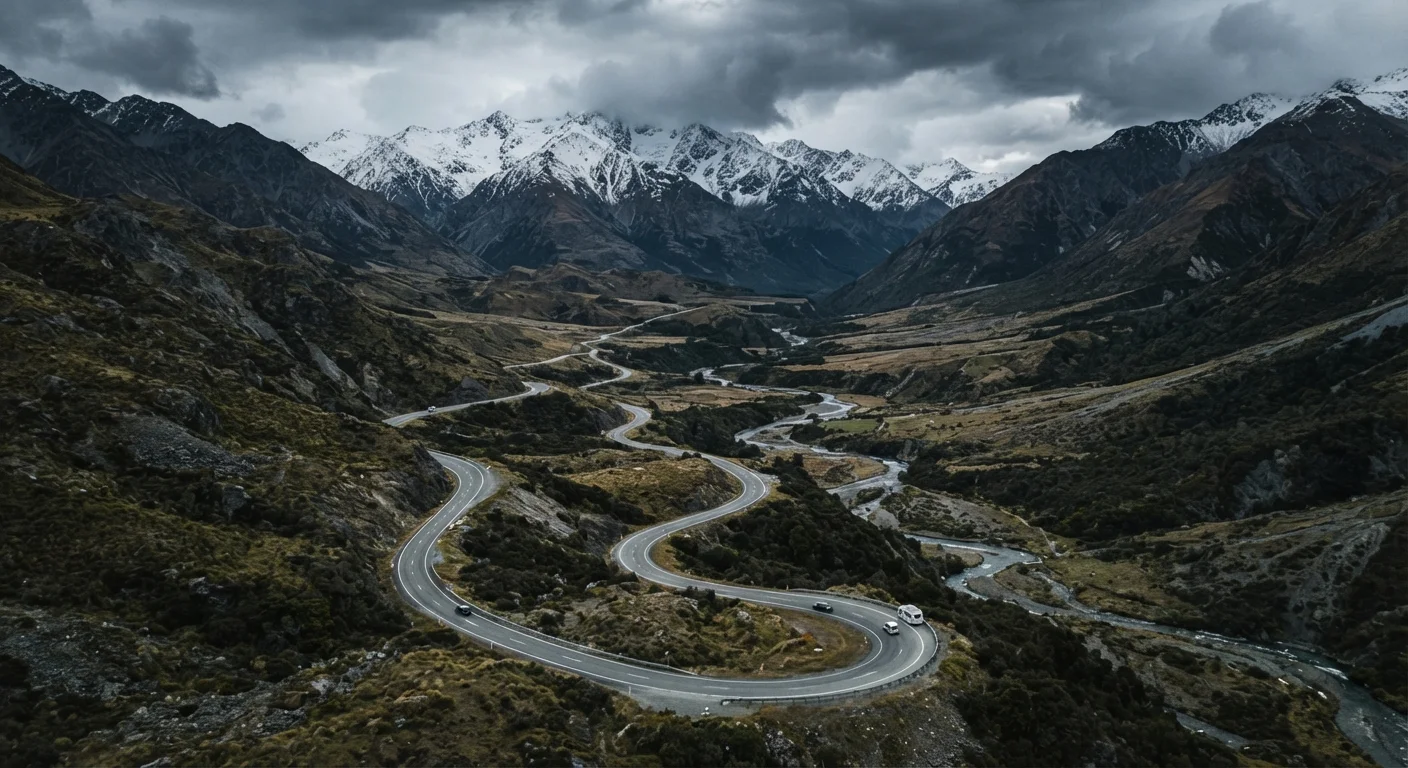
The South Island stretches roughly 570 miles from the northern tip of the Marlborough Sounds to Bluff in the deep south. The terrain between those points — braided rivers, alpine passes, fjords, and glacier-carved valleys — means that road travel rarely unfolds at highway speeds. A 200-mile route can take five or six hours without difficulty. That gap between geographic distance and travel time is the single most common source of frustration for first-time visitors, and closing it mentally before you leave home changes everything about how a trip comes together.
This isn't a reason to avoid the island — far from it. The South Island rewards travelers who understand its scale. Those who do tend to slow down, choose fewer places, and come away with experiences that are harder to summarize in a sentence. For context on how similar planning realities shape other spectacular destinations, see our look at what the Amalfi Coast demands logistically.
Myth
The South Island is small and easy to cover in a week.
Fact
The island spans over 570 miles, and mountain terrain means driving times are consistently longer than distances suggest.
A week is enough time to experience one or two regions well — not the island as a whole. Travelers who underestimate distances often spend more time in their rental car than outside it. Fiordland alone, if you want to reach Milford Sound, do a day walk, and travel to the next destination, can absorb three to four days without feeling rushed. Choosing depth over breadth is almost always the more rewarding decision.
Myth
Summer guarantees good weather everywhere on the island.
Fact
The Southern Alps create two distinct climate zones; the West Coast is rainy year-round regardless of season.
Fiordland and the West Coast are among the wettest regions in the world by annual rainfall. Summer reduces some weather risk on the East Coast and high alpine areas, but it does not tame the West Coast. Milford Sound receives rain roughly 180 days per year on average. Rain there isn't a disappointment — it's what feeds the hundreds of temporary waterfalls that cascade down fjord walls after storms and make the place look like something generated by special effects.
Myth
Booking accommodation in advance is optional outside peak season.
Fact
Popular trail huts, national park lodges, and small-town accommodation fill months ahead even in shoulder season.
The Department of Conservation (DOC) huts on New Zealand's Great Walks — including the Milford, Routeburn, and Kepler tracks — operate on a booking system that opens months in advance and sells out rapidly for peak dates. Even accommodation in small gateway towns like Te Anau or Twizel can be limited, especially when weather delays push visitors into unexpected extra nights. Flexibility is valuable, but it works better as a secondary plan than a primary strategy.
Myth
Rental cars give you complete freedom to go anywhere at any time.
Fact
Many back-country roads and river crossings require specific vehicle types, and some routes close seasonally or after weather events.
Standard rental agreements typically prohibit taking vehicles on unsealed roads, across river fords, or through certain mountain passes in adverse conditions — restrictions that can surprise travelers who assumed full freedom of movement. The Skippers Canyon Road near Queenstown, for instance, is excluded from most standard rental insurance policies. Checking specific road conditions and vehicle terms before setting a route prevents costly, frustrating situations mid-trip. Road condition updates from the New Zealand Transport Agency (Waka Kotahi) are publicly accessible and worth consulting regularly during a trip.
Myth
Milford Sound is the only worthwhile fjord experience.
Fact
Doubtful Sound and Dusky Sound offer comparable or greater natural scale with significantly fewer visitors.
Milford Sound (Piopiotahi) is genuinely stunning and deserves its reputation, but Fiordland contains 14 named sounds and fjords. Doubtful Sound — accessible by boat and overland shuttle — is three times larger than Milford and sees a fraction of the daily visitor volume. Dusky Sound, the largest, is accessible only by boat or floatplane and remains one of the most remote coastal environments in the country. For travelers who have discovered that a destination's most celebrated site is often just one of many worthwhile ones — as with Peru beyond Machu Picchu — this pattern holds true in Fiordland.
Weather, Seasons, and the West Coast Reality
The Southern Alps run like a spine down the island, dividing it into two climatically distinct halves. The West Coast — Westland, Fiordland, the Haast Pass corridor — receives some of the highest rainfall of any inhabited region on Earth. Fiordland alone can receive over 200 inches of rain annually in some areas. The East Coast, by contrast, lies in a rain shadow that produces dry, sunny conditions in places like Cromwell and Wānaka.
This asymmetry catches visitors off guard. Travelers who arrive during New Zealand's summer (December–February) sometimes assume stable, warm conditions throughout the island — and get drenched in Milford Sound while sunshine bakes the Mackenzie Basin the same afternoon. Neither experience is an anomaly. Both are normal.
Alpine Road Closures Can Happen Without Notice
Key mountain passes including the Haast Pass and Lewis Pass are subject to sudden closure due to slips, flooding, or snowfall — sometimes for multiple days. Travelers relying on these routes for connections between the coasts should build buffer days into their itinerary and always check current road status before departing. Official road condition information is available through New Zealand's Waka Kotahi transport authority.
Shoulder seasons offer a genuine alternative worth considering. March through April brings autumn color to beech forests and populated valleys, with noticeably thinner crowds on the Great Walks and at Queenstown's busiest viewpoints. October and November carry more weather uncertainty but reward flexible travelers with lower accommodation pressure and functioning trail conditions. For travelers weighing how seasonality shapes a similar high-latitude adventure, the approach behind planning a first Iceland visit maps onto many of the same questions.
~200+
Annual inches of rainfall in parts of Fiordland
Fiordland's rainfall figures place it among the wettest inhabited regions on Earth, a factor that shapes every West Coast itinerary.
9 Great Walks
Nationally managed multi-day trails in New Zealand
Four of New Zealand's nine Great Walks are located on the South Island, including the Milford, Routeburn, Kepler, and Abel Tasman Coast Tracks.
Beyond Queenstown: What the Rest of the Island Offers
Queenstown functions as an entry point for millions of visitors each year — and it works well for that purpose. Adventure activities, reliable transport connections, and a dense service infrastructure make it easy to arrive and feel oriented quickly. But treating Queenstown as the South Island, rather than a gateway to it, means missing most of what the island actually contains.
The Mackenzie Basin, anchored by Aoraki/Mount Cook National Park, offers some of the darkest skies in the Southern Hemisphere and glacial lakes so still they act as mirrors for the peaks above them. Nelson and the Abel Tasman coastline in the north bear almost no resemblance to the alpine south — golden sand beaches and turquoise bays sit alongside the island's most walked coastal track. The Catlins, on the remote southeastern corner, holds fossilized forests, fur seal colonies, and a quality of solitude that becomes harder to find as visitor numbers grow elsewhere. Much like the way Patagonia divides into two distinct experiences depending on which country you approach from, the South Island rewards travelers who deliberately choose a region rather than trying to graze across all of them.
Great Walk Bookings Open Months in Advance
If a multi-day tramp is central to your South Island trip, treat hut bookings as a non-negotiable first step — not an afterthought. The Milford Track, in particular, operates on a strict guided or independent walker quota. Arriving without a booking means you will not be able to do the track, regardless of weather or availability appearing otherwise. Check the Department of Conservation's official booking system early and plan your travel dates around confirmed availability.