

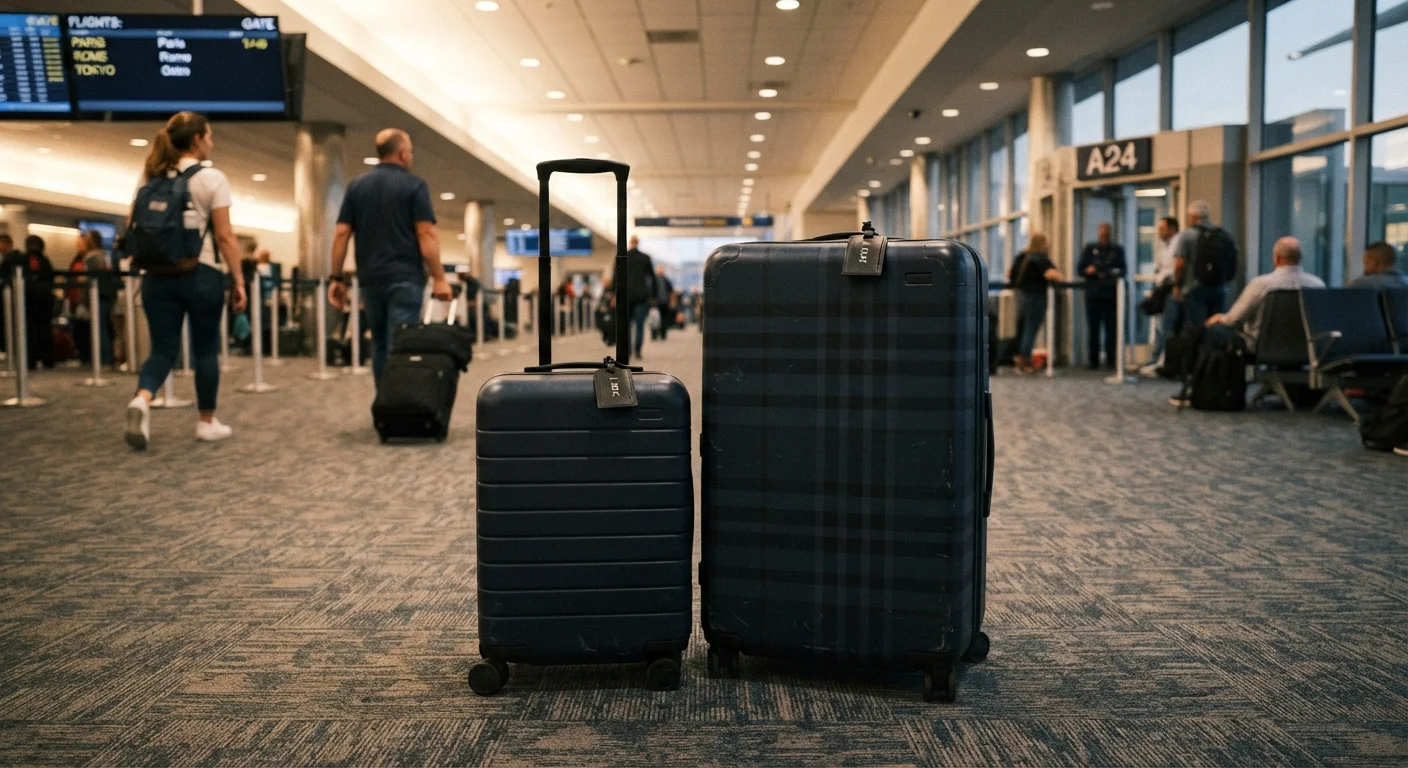
Key Takeaways
Option A
Carry-On Luggage
The agile, stay-in-control option for travelers who value speed and simplicity.
Best for: Short trips, frequent flyers, and anyone who wants to skip baggage claim and move fast.
Option B
Checked Luggage
The spacious, flexible choice for longer journeys and heavier packing needs.
Best for: Extended travel, families, specialty gear hauls, or trips requiring more than one week of clothing.
If you're taking a weekend or short business trip
Carry-On Luggage
A carry-on handles a few days of clothing with ease, saves you baggage fees, and gets you out of the airport faster.
If you're traveling for two weeks or more
Checked Luggage
Longer trips demand more clothing options and toiletries than a carry-on can realistically hold without careful editing.
If you're bringing sports equipment, formal wear, or medical supplies
Checked Luggage
Bulky or specialized gear rarely fits airline carry-on dimensions, and checked bags give you the room and flexibility you need.
If you're hopping between multiple cities or taking connecting flights
Carry-On Luggage
Checked bags increase risk during tight connections; keeping your bag with you removes one major point of failure.
If you're traveling with young children or managing complex logistics
Checked Luggage
Families often need extra gear — strollers, formula, clothing layers — that simply can't be compressed into overhead-bin limits.
The Core Trade-Off Every Traveler Faces
Standing at the airline website's baggage options page, most travelers feel a familiar tension: pack light and stay nimble, or pack everything and check the bag. It's a deceptively simple choice with real downstream consequences — from how fast you clear the airport to whether your belongings survive the journey intact.
The answer isn't universal. It hinges on where you're going, how long you'll be there, and what kind of traveler you are. Understanding the genuine trade-offs on both sides makes the decision straightforward rather than stressful. For a broader look at the decisions that shape your journey before departure, see our pre-trip checklist for every traveler.
| Criterion | Carry-On | Checked Bag |
|---|---|---|
| Baggage fees | Typically free (most U.S. carriers) | Usually $30–$40+ per bag, per direction |
| Space available | Limited — roughly 22×14×9 inches | Generous — typically 62 linear inches |
| Liquid restrictions | 3.4 oz max per container (TSA rule) | No TSA liquid limit |
| Risk of loss or delay | Very low — stays with you | Low but possible — leaves your control |
| Airport exit speed | Fast — no baggage claim wait | Slower — baggage claim adds time |
| Best trip length | 1–7 days (with efficient packing) | 7+ days or gear-heavy trips |
| Connecting flight risk | Lower — bag is with you | Higher — bag must transfer between planes |
What Carry-On Travel Actually Gives You
Traveling with only a carry-on fundamentally changes your airport experience. You walk off the plane and straight out the door — no waiting at the baggage carousel, no anxiety about whether your bag made the connection. On a domestic trip with a single airline, that efficiency is hard to overstate.
Carry-on travel also eliminates checked baggage fees, which many U.S. carriers now charge per bag, per direction. For frequent flyers, those savings compound quickly. And because your bag never leaves your sight, the risk of loss or mishandling drops significantly.
The constraints are real, though. TSA regulations limit liquids in carry-ons to containers of 3.4 ounces or less, all fitting in a single quart-sized bag — a real inconvenience for skincare routines or certain medications. Overhead bin space can also be scarce on full flights, and airlines vary on exactly what dimensions and weights they accept. Always check your specific carrier's rules before you pack. If you want a practical framework for making carry-on packing work without sacrificing essentials, our guide on packing light without leaving essentials behind offers a solid starting point.
2.9 per 1,000
Mishandled bag rate (U.S. airlines)
The U.S. Department of Transportation's Air Travel Consumer Report tracks mishandled baggage rates; in recent years these have hovered under 3 per 1,000 passengers, though figures vary by carrier.
~20–45 min
Average baggage claim wait time
Industry estimates suggest checked-bag travelers can expect to wait 20 to 45 minutes at baggage claim, depending on airport size and carrier — time carry-on travelers skip entirely.
$60–$80+
Round-trip checked bag fee (typical)
Most major U.S. carriers charge a per-bag, per-direction fee for the first checked bag, making a round-trip add-on a meaningful cost for budget-conscious travelers.
When Checked Baggage Is the Right Call
Checked luggage earns its place on longer trips, family vacations, and any journey requiring gear that simply won't fit in a cabin bag. A standard checked bag typically allows 50 pounds and dimensions that dwarf carry-on limits — meaning full wardrobes, shoes for multiple occasions, and full-size toiletries all become viable again.
For trips lasting more than a week, the math often favors checking a bag. Packing ten-plus days of clothing into a carry-on requires either a rigid minimalist approach or a lot of laundry planning mid-trip. Families with young children frequently find checked bags non-negotiable; the sheer volume of gear required makes overhead-bin packing unrealistic.
The downsides are worth naming clearly. Checked bags can be delayed, misdirected, or damaged — though mishandled bag rates in the U.S. have improved in recent years, the risk isn't zero. You'll also spend time at both check-in and baggage claim, which adds meaningful minutes (sometimes an hour or more) to your airport experience. For long-haul destinations where gear decisions matter from day one, our pre-departure self-check for long-haul travel can help you think through what you actually need to bring.
Airline Policies Vary Significantly
Carry-on size limits, checked bag fees, and weight allowances differ across carriers — and even between fare classes on the same airline. Budget carriers may charge for overhead-bin bags entirely, while some international routes have stricter weight caps. Always review your specific airline's current baggage policy before you pack. Official airline websites are the most reliable source for up-to-date rules.
Making the Smart Choice for Your Specific Trip
The most practical approach is to treat this as a trip-by-trip decision rather than a fixed identity. A three-day work trip to Chicago calls for different logic than two weeks in Southeast Asia or a ski vacation in Colorado. Ask yourself three questions: How many days am I gone? Do I need items that can't go in a carry-on (liquids over 3.4 oz, sharp tools, or bulky equipment)? How important is airport speed versus packing comfort?
Many experienced travelers use a hybrid strategy: a carry-on roller plus a personal item (laptop bag, tote, or daypack) maximizes overhead-bin allowances while keeping everything accessible. This works well for trips up to about ten days when packing is thoughtful. For more guidance on getting the most out of limited luggage space, our piece on which items earn their weight breaks down minimalist packing with real-world nuance.
There's no shame in checking a bag when the trip demands it — and no medal for suffering through an overstuffed carry-on. The goal is a trip that starts and ends smoothly, with the right gear where you need it.