

Key Takeaways
Soil pH
Soil pH is a measure of how acidic or alkaline your soil is, rated on a scale from 0 to 14. A pH of 7 is neutral; numbers below 7 indicate acidity, and numbers above 7 indicate alkalinity. This single measurement has an outsized influence on whether plants can access the nutrients already present in your soil.
pH stands for 'potential of hydrogen' and reflects the concentration of hydrogen ions in the soil solution. Even small shifts on the scale — say, from 6.5 to 5.5 — represent a tenfold change in acidity due to the logarithmic nature of the scale.
How pH Controls Nutrient Availability
Think of soil pH as a gatekeeper. Even if your soil contains ample nitrogen, phosphorus, or iron, those nutrients may be chemically bound in forms plant roots simply cannot absorb — all because the pH is out of range. This explains a common frustration: gardeners fertilize faithfully but still see stunted growth or yellowing leaves.
At pH levels below 6.0, aluminum and manganese can become soluble enough to reach toxic concentrations, while phosphorus binds tightly to soil particles and becomes largely unavailable. Above pH 7.5, iron, manganese, copper, and zinc all become increasingly insoluble. The sweet spot for most plants — roughly pH 6.0 to 7.0 — is where the widest range of nutrients stays dissolved and accessible in the soil water.
Understanding this relationship also clarifies why adding fertilizer without addressing pH can be wasteful. As discussed in our guide to organic vs. synthetic fertilisers, the form of nutrients matters — but if pH is wrong, even the best fertilizer delivers diminishing returns.
pH Preferences: What Different Plants Actually Need
Not all plants share the same pH comfort zone, and some have quite specific requirements that are worth knowing before you plant.
- Acid-loving plants (pH 4.5–5.5): Blueberries, azaleas, rhododendrons, camellias, and gardenias fall into this group. They need acidic conditions to absorb iron and other micronutrients effectively.
- Slightly acidic to neutral (pH 6.0–7.0): Most vegetables, roses, lawn grasses, and the majority of annual flowers perform best here. This range offers the broadest nutrient availability.
- Neutral to slightly alkaline (pH 7.0–7.5): Lavender, clematis, brassicas (cabbage, broccoli, kale), and asparagus tolerate or even prefer near-neutral to mildly alkaline conditions.
If you're working with native plants, matching them to your regional soil pH is generally straightforward — they've adapted to local conditions over generations.
Testing Your Soil and Making Adjustments
Testing is the essential first step — guessing at pH and applying amendments blindly risks making things worse. Here's how to approach it systematically:
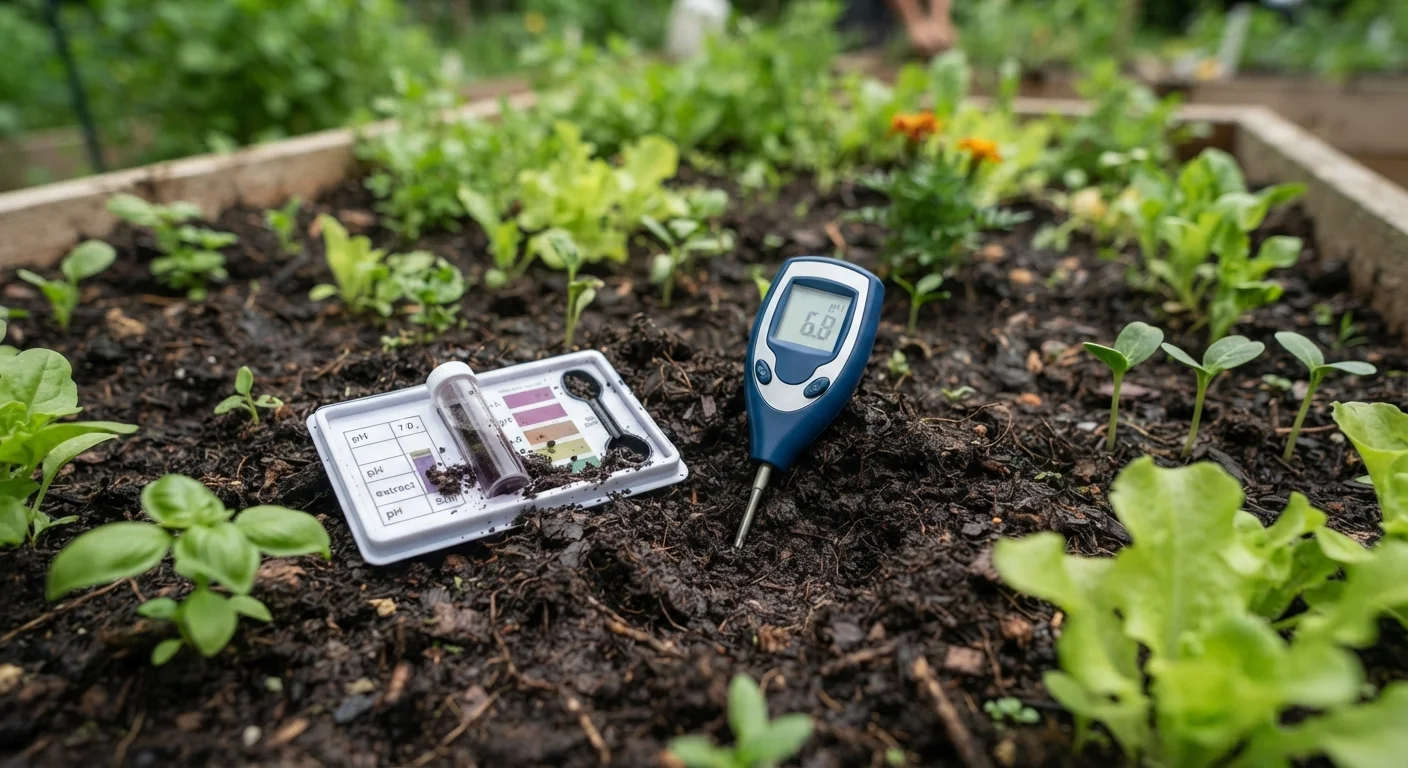
- Test first: Use a home test kit for a rough reading, or submit a sample to your local cooperative extension service for a detailed report that includes nutrient levels and amendment recommendations.
- To raise pH (make soil less acidic): Apply ground agricultural limestone (calcitic or dolomitic). Work it into the top 6–8 inches of soil well before planting. Results take several months, so fall application for spring planting is good practice.
- To lower pH (make soil more acidic): Elemental sulfur is the most reliable option; soil bacteria convert it to sulfuric acid over time. Incorporating peat moss or pine bark mulch also contributes modest acidification over time. For a broader look at how mulch influences soil chemistry, see our guide to mulching.
- Retest after amendments: Wait 2–3 months, then retest before making further adjustments. Overcorrecting is a common and avoidable mistake.
In some cases — particularly with extremely sandy or clay-heavy soils — improving soil structure overall yields better results than chasing a specific pH number. Consistent organic matter additions through compost gradually buffer pH while improving drainage and water retention.
When to Work With Your pH Rather Than Against It
Dramatically shifting soil pH across a large garden area is labor-intensive, expensive, and requires ongoing maintenance. In many situations, it's more practical to select plants suited to your existing pH than to engineer conditions from scratch.
If your soil naturally runs acidic — common in the Pacific Northwest, New England, and the Southeast — leaning into acid-tolerant plants such as blueberries, ferns, and native woodland shrubs makes long-term garden management simpler. Conversely, gardeners in the arid West and Midwest, where alkaline soils are common, often find that raised beds with amended growing mix offer the most efficient path to growing pH-sensitive vegetables and flowers.
The goal isn't a perfect number — it's a garden that works with your soil's natural tendencies as much as possible, adjusted strategically where the effort is warranted.