

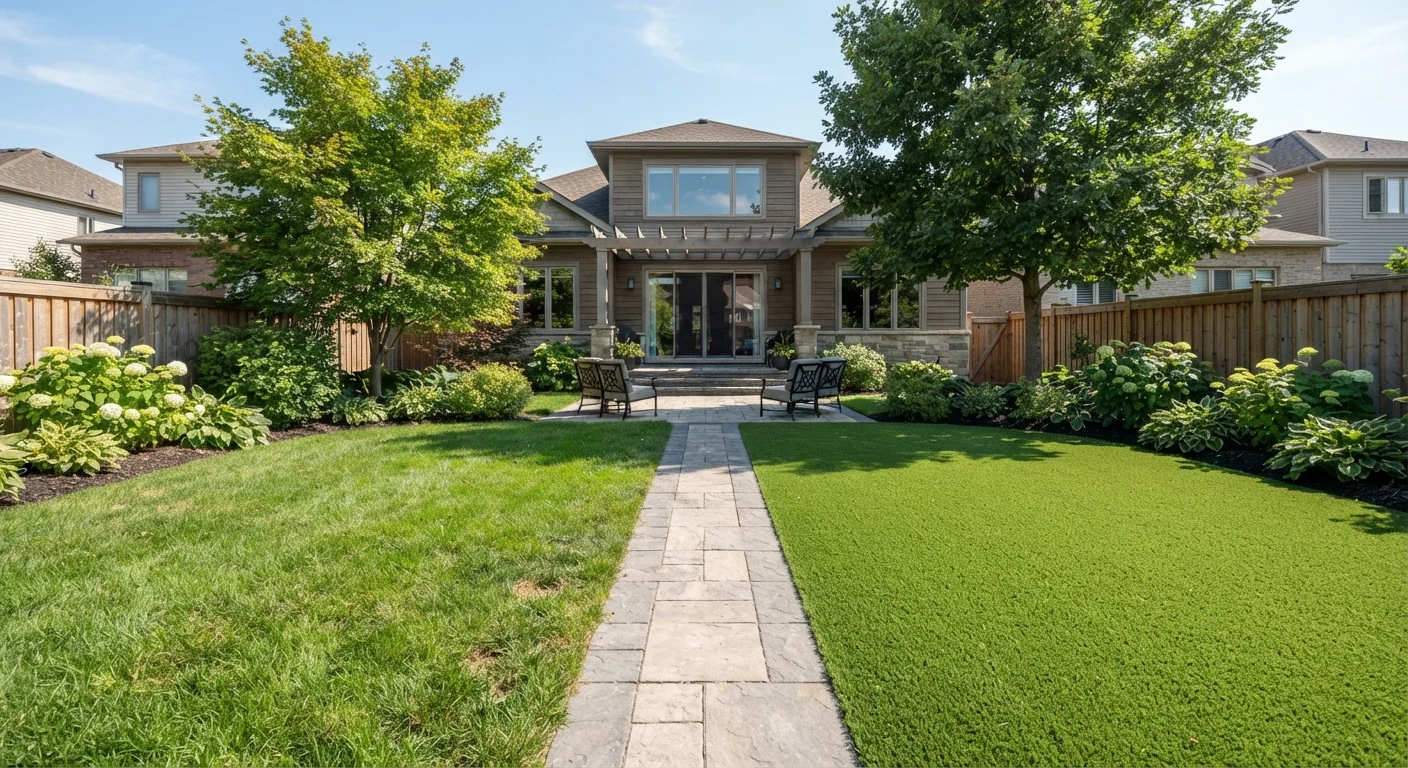
Key Takeaways
Dramatically reduces water consumption year-round
A natural lawn can require 1–2 inches of water per week during growing season; artificial turf needs only occasional rinsing. In drought-affected regions, this represents a substantial reduction in household water use.
Eliminates mowing, edging, and seasonal reseeding
Homeowners gain back weekend hours previously spent on lawn care — a significant quality-of-life benefit for busy households or older adults managing mobility challenges.
Performs well in difficult growing conditions
Shaded areas, high-traffic play zones, and compacted clay soils defeat natural grass repeatedly. Synthetic turf maintains its appearance regardless of these conditions.
No pesticides or fertilisers required
Removing chemical inputs benefits household members who spend time on the lawn and reduces the risk of chemical runoff into nearby garden beds or drainage systems.
Stays green and uniform throughout all seasons
Unlike cool- or warm-season grasses that brown or go dormant, artificial turf presents a consistent appearance through summer heat, winter cold, and heavy foot traffic.
Surface temperatures can reach dangerous levels
Studies have recorded artificial turf surface temperatures exceeding 150°F (65°C) in direct sun — significantly hotter than natural grass, asphalt, or bare soil. This poses real burn risks for children and pets.
Microplastic shedding raises environmental concerns
Synthetic fibers and crumb rubber infill can shed microplastics into surrounding soil and waterways over time. Researchers continue to study the scale and long-term ecological impact of this shedding.
Provides zero ecological value
Artificial turf supports no pollinators, soil microorganisms, or wildlife habitat. It eliminates the carbon sequestration, air cooling, and oxygen production that living grass provides.
High upfront installation cost
Professional installation typically costs several times more per square foot than seeding or sodding, creating a significant initial financial commitment with a multi-year payback period.
End-of-life disposal is problematic
Most worn-out artificial turf cannot be recycled and ends up in landfill. Each installation represents a future disposal challenge that few homeowners factor into their initial decision.
Does not improve or interact with soil health
Beneath synthetic turf, soil biology stagnates — no organic matter is added, aeration is reduced, and the living ecosystem that underpins healthy gardens is effectively paused.
Our Verdict
Artificial lawn delivers real, measurable benefits for households with limited time, water restrictions, or difficult growing conditions. However, the environmental drawbacks — heat buildup, microplastic shedding, and loss of biodiversity — are genuine concerns that deserve serious weight. It is not a universally better solution, but a purposeful trade-off.
Best suited to homeowners in drought-prone climates, high-traffic play areas, or properties where grass consistently fails to establish — not recommended as a blanket replacement for a functioning, ecologically active lawn.
What Is Artificial Lawn, and How Has It Changed?
Artificial lawn — also called synthetic turf or fake grass — is a surface made from synthetic fibers designed to mimic the look and feel of natural grass. Originally developed for sports stadiums in the 1960s, modern residential products bear little resemblance to their predecessors. Today's versions use polyethylene or polypropylene blades in varying heights and densities, often with a crumb rubber or sand infill layer to add cushioning and help blades stand upright.
The category has grown substantially as homeowners seek low-maintenance alternatives to natural lawns, particularly in regions facing water restrictions or persistent dry spells. Before committing, it's worth understanding exactly what you're gaining — and what you're giving up.
The Case For Artificial Lawn
For many households, the appeal of artificial grass is straightforward: less work, lower water bills, and a consistently presentable yard regardless of the season.
Dramatically reduces water consumption year-round
A natural lawn can require 1–2 inches of water per week during growing season; artificial turf needs only occasional rinsing. In drought-affected regions, this represents a substantial reduction in household water use.
Eliminates mowing, edging, and seasonal reseeding
Homeowners gain back weekend hours previously spent on lawn care — a significant quality-of-life benefit for busy households or older adults managing mobility challenges.
Performs well in difficult growing conditions
Shaded areas, high-traffic play zones, and compacted clay soils defeat natural grass repeatedly. Synthetic turf maintains its appearance regardless of these conditions.
No pesticides or fertilisers required
Removing chemical inputs benefits household members who spend time on the lawn and reduces the risk of chemical runoff into nearby garden beds or drainage systems.
Stays green and uniform throughout all seasons
Unlike cool- or warm-season grasses that brown or go dormant, artificial turf presents a consistent appearance through summer heat, winter cold, and heavy foot traffic.
55 gal
Water saved per square foot annually
The EPA estimates that a typical lawn uses around 55 gallons of water per square foot each year, much of which can be eliminated by switching to artificial turf.
150°F+
Peak surface temperature in direct sun
Research published in environmental and sports science journals has consistently recorded artificial turf surface temperatures well above natural grass under the same conditions.
Beyond water savings, synthetic turf eliminates the need for pesticides, herbicides, and fertilisers — chemicals that can run off into local waterways. For households with young children or pets who spend time on the lawn, removing those inputs is a meaningful benefit. Artificial grass also performs well in shaded areas or high-traffic zones where natural grass routinely fails to establish, making it a practical solution where biology works against you.
The Case Against Artificial Lawn
The drawbacks of synthetic turf are real and shouldn't be minimised. Environmental advocates, ecologists, and many garden designers raise consistent objections that go beyond aesthetics.
Surface temperatures can reach dangerous levels
Studies have recorded artificial turf surface temperatures exceeding 150°F (65°C) in direct sun — significantly hotter than natural grass, asphalt, or bare soil. This poses real burn risks for children and pets.
Microplastic shedding raises environmental concerns
Synthetic fibers and crumb rubber infill can shed microplastics into surrounding soil and waterways over time. Researchers continue to study the scale and long-term ecological impact of this shedding.
Provides zero ecological value
Artificial turf supports no pollinators, soil microorganisms, or wildlife habitat. It eliminates the carbon sequestration, air cooling, and oxygen production that living grass provides.
High upfront installation cost
Professional installation typically costs several times more per square foot than seeding or sodding, creating a significant initial financial commitment with a multi-year payback period.
End-of-life disposal is problematic
Most worn-out artificial turf cannot be recycled and ends up in landfill. Each installation represents a future disposal challenge that few homeowners factor into their initial decision.
Does not improve or interact with soil health
Beneath synthetic turf, soil biology stagnates — no organic matter is added, aeration is reduced, and the living ecosystem that underpins healthy gardens is effectively paused.
Crumb Rubber Infill: An Ongoing Debate
Many artificial turf products use crumb rubber — recycled from old tires — as infill material. Concerns have been raised about potential chemical leaching from crumb rubber, particularly in products used in children's play areas. While regulatory agencies in the US have conducted reviews, research is ongoing and findings remain mixed. If this is a concern, silica sand or organic infill alternatives are available. Consult current guidance from agencies such as the EPA or CPSC for the latest assessment.
Unlike a natural lawn, synthetic turf contributes nothing to local ecosystems. It supports no pollinators, adds no organic matter to soil, and does not cool surrounding air through transpiration. If you're interested in how living plants interact with soil health and garden ecology, the contrast with approaches like choosing native plants is stark. Artificial grass is, fundamentally, a surface — not a garden.
Cost and Long-Term Commitment
Installation costs for artificial turf vary widely depending on product quality, ground preparation required, and regional labor rates, but professional installation typically runs considerably higher per square foot than sodding or seeding. Most homeowners recoup some of that cost through reduced water bills and zero spending on lawn care products, but the break-even timeline can stretch to several years.
Warranties of 8–15 years are common, but product lifespan depends heavily on UV exposure, foot traffic, and maintenance habits. At end of life, synthetic turf is difficult to recycle — most ends up in landfill. Factor that into your long-term calculation alongside the upfront price.
If you're reconsidering how your outdoor space is organized more broadly, it's worth exploring options like raised beds versus in-ground planting, which can free up lawn area for productive growing while keeping living ground cover where it matters most.
Maintenance: Lower — But Not Zero
One of the most persistent myths about artificial lawn is that it requires no upkeep. In practice, it needs regular brushing to keep fibers upright, rinsing to remove pet waste and debris, and periodic inspection for seam separation or infill displacement. Leaves and organic matter still accumulate and should be cleared to prevent mold and odor.
Pet owners should be aware that urine can create odor problems over time, and some infill materials require more frequent rinsing to manage this. In climates with heavy rainfall, drainage performance should also be verified — poorly installed artificial turf can pool water just as badly as compacted natural soil. Compared to mulching strategies or other ground-cover approaches, synthetic turf still demands a genuine maintenance routine.