

Key Takeaways
Our Verdict
No single finish is universally superior. Matte conceals imperfections but resists scrubbing; gloss is the toughest but amplifies surface flaws. Eggshell and satin occupy a practical middle ground that suits most rooms in a typical US home.
| Best for | Recommended |
|---|---|
| Bedrooms, dining rooms, and ceilings | Matte |
| Living rooms, hallways, and general walls | Eggshell |
| Kitchens, bathrooms, and kids' rooms | Satin |
| Trim, doors, cabinets, and millwork | Gloss |
What Paint Sheen Actually Means
Paint sheen refers to how much light a dried paint surface reflects. It is determined by the ratio of pigment to binder in the formula — a higher binder content produces a smoother, more reflective film. Sheen is not just an aesthetic choice; it changes how a finish holds up to moisture, cleaning, and daily contact.
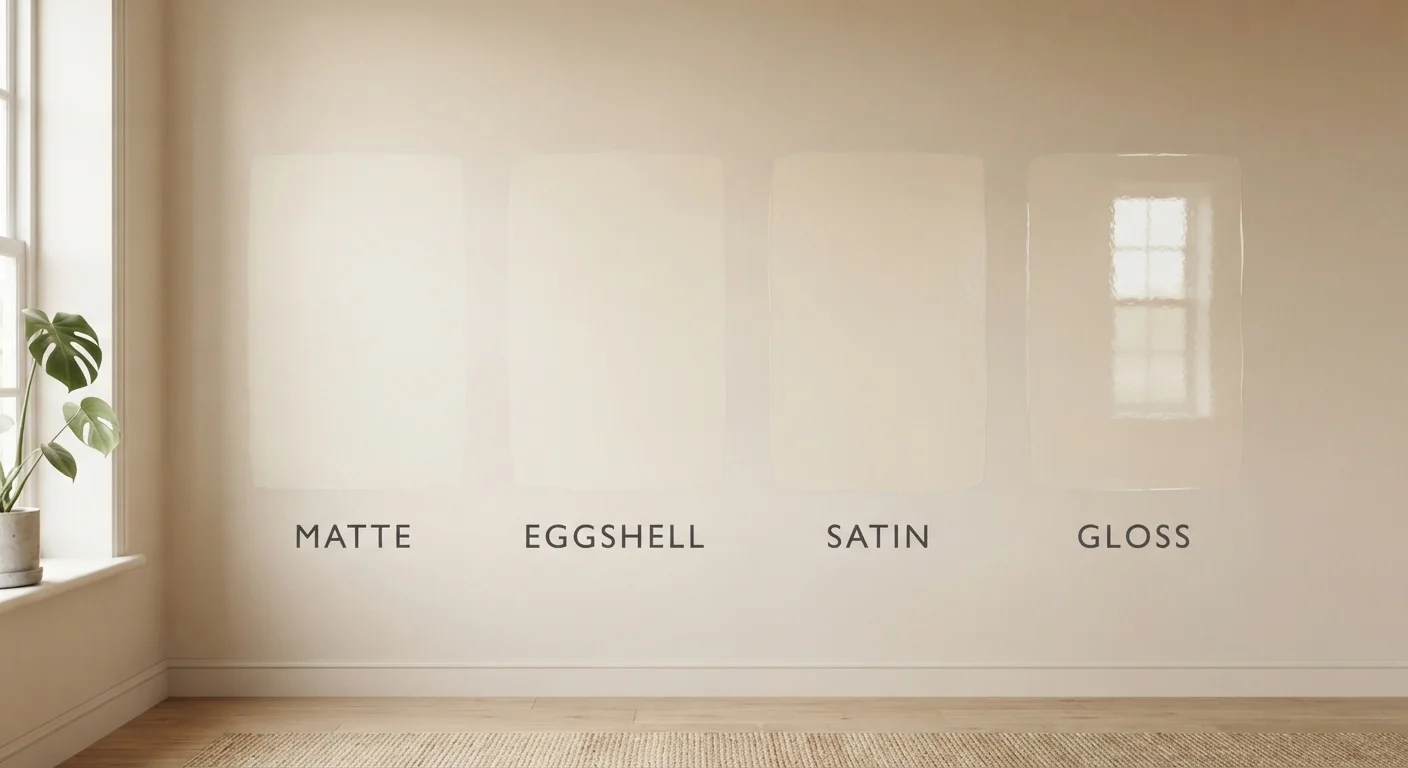
The four most common interior sheens — matte (also called flat), eggshell, satin, and gloss — form a spectrum from zero reflectivity to a mirror-like shine. Semi-gloss sits between satin and gloss and is commonly used on trim alongside true high-gloss; this guide focuses on the four primary categories most homeowners encounter.
Paint sheen also interacts with light and color in ways that affect how a room feels overall. A matte finish absorbs light, making colors appear richer and deeper, while a gloss finish bounces it back and can make a small room feel more energetic — or more clinical. For a broader look at how these visual variables work together, see the principles behind rooms that feel cohesive.
Side-by-Side Comparison
The table below summarizes how each finish performs across the criteria that matter most to homeowners. Use it as a starting point, then consider your specific room conditions — lighting, traffic, and humidity — before deciding.
| Matte | Eggshell | Satin | Gloss | |
|---|---|---|---|---|
| Sheen level | None / flat | Very low | Medium | High |
| Washability | Low — wipe gently | Moderate | Good | Excellent |
| Hides surface imperfections | Best | Good | Moderate | Poor |
| Moisture resistance | Poor | Low–moderate | Good | Excellent |
| Best surfaces | Ceilings, bedrooms | Living rooms, hallways | Kitchens, baths | Trim, doors, cabinets |
| Touch-up ease | Easy — blends well | Moderate | Tricky | Difficult |
| Light reflection effect | Absorbs light, deepens color | Subtle warmth | Mild brightness | Amplifies light and flaws |
One nuance the table cannot capture: higher sheen amplifies surface imperfections. Gloss and satin will highlight every drywall ding, tape seam, and roller mark that matte would quietly absorb. If your walls are not in great shape, a lower sheen buys you forgiveness.
Room-by-Room Guidance
Bedrooms and Dining Rooms
These spaces see limited moisture and relatively light contact with walls. Matte is a natural fit — it creates a soft, non-distracting backdrop that lets furnishings and artwork take center stage. Its light-absorbing quality also works well on ceilings throughout the home, where any sheen tends to look unintentionally glossy under overhead lighting.
Living Rooms and Hallways
Eggshell is the workhorse finish for these areas. It has just enough sheen to be wiped down with a damp cloth, yet it reads as nearly flat in most lighting. Hallways in particular benefit from eggshell's durability — shoulder scuffs and hand marks are inevitable in a narrow corridor. If your walls have texture — beadboard, shiplap, or applied molding — paint sheen interacts with those surfaces in ways described in this guide to texture in interior design.
Kitchens, Bathrooms, and Kids' Rooms
Satin earns its place in high-humidity and high-contact spaces. It can withstand repeated washing without the finish wearing off, and it resists mildew better than lower-sheen options. Bathrooms with poor ventilation benefit especially from satin's moisture resistance.
Ventilation Matters More Than Finish Alone
In bathrooms, no paint finish fully compensates for poor airflow. Run an exhaust fan during and for 20 minutes after every shower, and repaint with satin or semi-gloss rather than matte if you notice peeling or mildew staining. Moisture control and appropriate finish together are more effective than either measure alone.
Trim, Doors, and Cabinets
Gloss (or semi-gloss) belongs on surfaces that need to stand up to frequent touching, slamming, and cleaning. The high reflectivity that makes gloss impractical on large walls is actually an asset on narrow trim — it creates crisp visual definition and is easy to wipe clean. Apply gloss over a well-prepared, smooth surface; it will expose any roughness.
Common Mistakes to Avoid
Painting a kitchen or bathroom in flat paint is one of the most frequent finish missteps. Flat paint is not designed for wet environments — moisture can cause the film to soften, and scrubbing will leave dull patches where the surface wears away.
Flat Paint in Wet Rooms Will Fail
Matte and flat paints are not formulated to handle humidity, condensation, or repeated wiping. Applying them in kitchens or bathrooms typically leads to early peeling, mold growth behind the film, and a surface that deteriorates faster than correctly specified finishes. Always check the manufacturer's recommended applications before purchasing.
Using gloss on large wall areas is the opposite problem. Walls are rarely perfectly smooth, and gloss makes every imperfection apparent under raking light. If you want a dramatic, high-sheen look on walls, prepare the surface meticulously — fill, sand, and prime before applying — and be prepared for more labor than a standard repaint requires.
Finally, mixing sheens within a single room without intention can create a visually inconsistent result. A quick room-by-room décor audit can help you identify where paint finish may be contributing to a space feeling unresolved.