

Key Takeaways
Cats Knocking Things Over
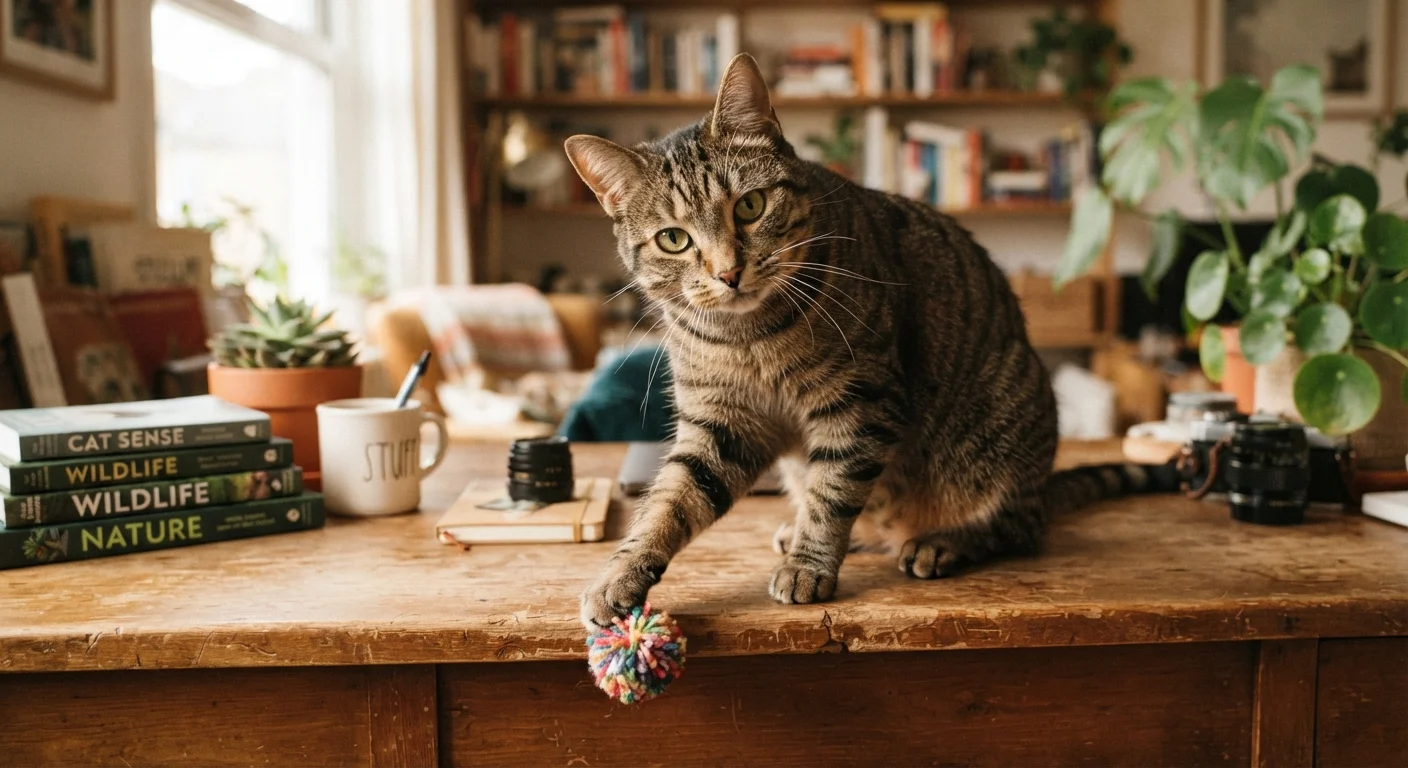
When cats deliberately bat or push objects off shelves, tables, or countertops, they are engaging in a behavior driven by instinct, sensory curiosity, and sometimes learned attention-seeking. It is not random mischief — it reflects how cats naturally investigate their environment and interact with potential prey-like objects. The behavior is extremely common across domestic cats of all ages and breeds.
Feline behaviorists classify this as a form of object play and exploratory manipulation, closely linked to predatory motor sequences hardwired in the cat's nervous system.
The Instinct Behind the Paw Swipe
To understand why cats knock things off surfaces, start with predatory biology. Domestic cats retain the full suite of hunting motor patterns their wild ancestors used — stalking, batting, and testing objects for signs of life are all part of that sequence. When a cat paws at a pen on your desk, it is running through essentially the same movement it would use to test whether a small creature is alive, dead, or likely to bolt.
The paw itself is a precision sensory instrument. Cats have a dense concentration of touch receptors in their toe pads, making tapping an efficient way to gather rapid information about an object's weight, texture, and responsiveness. In that sense, nudging your phone off the counter isn't vandalism — it's data collection.
Redirect Before the Swipe Happens
If you notice your cat eyeing an object with that focused, pre-paw-swipe expression, redirect with a wand toy or toss a crinkle ball nearby. Interrupting the sequence before it completes — without scolding — teaches your cat there's a better option available.
This same investigative drive explains several other instinct-driven behaviors. Cats bringing home prey operate on related predatory impulses, and understanding one helps you understand the other.
When Attention-Seeking Takes Over
Instinct may start the behavior, but learning sustains it. Many cats quickly discover that pushing something off a shelf produces a very satisfying result: their owner jumps up, makes noise, and pays direct attention. From the cat's perspective, the outcome is excellent regardless of whether the human seems pleased or exasperated.
This is a textbook example of reinforcement. Each time you rush over, scold, or laugh and film the act, you increase the likelihood it will happen again. Cats that knock things over most persistently are often those who have been rewarded with the most consistent — even if unintentional — attention.
2x daily
Recommended interactive play sessions for indoor cats
Veterinary behaviorists commonly recommend at least two structured play sessions per day to meet a cat's predatory activity needs.
~30
Touch receptors per cat paw pad
Research on feline sensory anatomy shows cats have densely packed mechanoreceptors in their toe pads, making them highly sensitive exploration tools.
If your cat engages in other attention-seeking patterns like excessive vocalization or interrupting your work, it may be worth exploring how stress and boredom manifest in cats to rule out underlying unmet needs.
The Role of Boredom and Under-Stimulation
Cats are active problem-solvers that need both physical and mental engagement. When those needs go unmet, they find their own outlets — and knocking objects off surfaces is a reliable one. It delivers movement, sound, and often a human reaction, making it a high-value self-entertainment strategy for a bored cat.
Indoor cats are particularly susceptible. Without the sensory variety of an outdoor environment, the household itself becomes the hunting ground. The trade-offs between indoor and outdoor living matter here: enrichment that compensates for limited outdoor access — puzzle feeders, climbing structures, window perches, and regular interactive play — can meaningfully reduce boredom-driven behaviors.
A general guideline supported by veterinary behaviorists is two or more structured play sessions daily using wand toys or other prey-mimicking objects. This channels the same impulses that lead to counter-sweeping into a more appropriate outlet.
When Enrichment Isn't Enough
If a cat's object-knocking is frequent, intense, or paired with other restless behaviors, it may signal that basic needs like mental stimulation, social interaction, or even health comfort aren't being fully met. A veterinary check-up can help rule out pain or anxiety as contributing factors before assuming it's purely behavioral.
What You Can Realistically Do About It
Complete elimination of this behavior is unlikely — it is too deeply rooted in normal feline cognition. But you can manage it effectively with a few consistent strategies.
- Don't reward the behavior: Walk away calmly when your cat knocks something over. Avoid eye contact, loud reactions, or picking the cat up. Remove the audience and the reinforcement loop breaks down.
- Secure meaningful objects: Keep irreplaceable or fragile items out of reach. Cats are more likely to bat at lightweight objects that move easily, so storing these reduces successful outcomes.
- Increase enrichment: Add puzzle feeders, foraging toys, or a window bird feeder your cat can watch. A stimulated cat has less need to manufacture its own excitement.
- Schedule interactive play: Regular wand-toy sessions before the times your cat is most active — often morning and evening — can redirect predatory energy constructively.
Consistency matters more than intensity. Small, sustained changes in how you respond and what you provide tend to produce better results than occasional bursts of effort.
If the behavior seems compulsive or is accompanied by other unusual patterns, a conversation with your veterinarian or a certified feline behaviorist is a reasonable next step. See also: territorial marking and other communication behaviors in cats for broader context on how cats express themselves through action.