

| Countries bordering the Adriatic | 6 — Italy, Slovenia, Croatia, Bosnia & Herzegovina, Montenegro, Albania |
| Longest Adriatic coastline | Croatia, approx. 3,600 miles including islands |
| Shortest national Adriatic coast | Slovenia, approx. 29 miles |
| UNESCO World Heritage Sites on the Adriatic | Multiple, including Dubrovnik Old City and Kotor Old Town (UNESCO World Heritage List) |
| Peak travel season | July–August across most destinations |
| Currency variation | Euro (Italy, Slovenia, Montenegro); Croatian euro (kuna replaced 2023); Albanian lek |
The Adriatic at a Glance
Most Americans who plan an Adriatic trip default to Croatia — and with good reason. But the sea itself borders six countries, and each stretch of coast brings a genuinely different landscape, culture, and travel experience. From a short 29-mile Slovenian shoreline to a still-emerging Albanian Riviera, the Adriatic rewards travelers willing to look beyond the familiar.
Think of this as a reference guide: a region-by-region breakdown of what distinguishes each destination and what kind of traveler it tends to suit best. For a useful comparison with another varied Mediterranean coastline, see our overview of Portugal's coastal regions.
| Countries bordering the Adriatic | 6 — Italy, Slovenia, Croatia, Bosnia & Herzegovina, Montenegro, Albania |
| Longest Adriatic coastline | Croatia, approx. 3,600 miles including islands |
| Shortest national Adriatic coast | Slovenia, approx. 29 miles |
| UNESCO World Heritage Sites on the Adriatic | Multiple, including Dubrovnik Old City and Kotor Old Town (UNESCO World Heritage List) |
| Peak travel season | July–August across most destinations |
| Currency variation | Euro (Italy, Slovenia, Montenegro); Croatian euro (kuna replaced 2023); Albanian lek |
Slovenia and Northern Italy: Understated Entrances
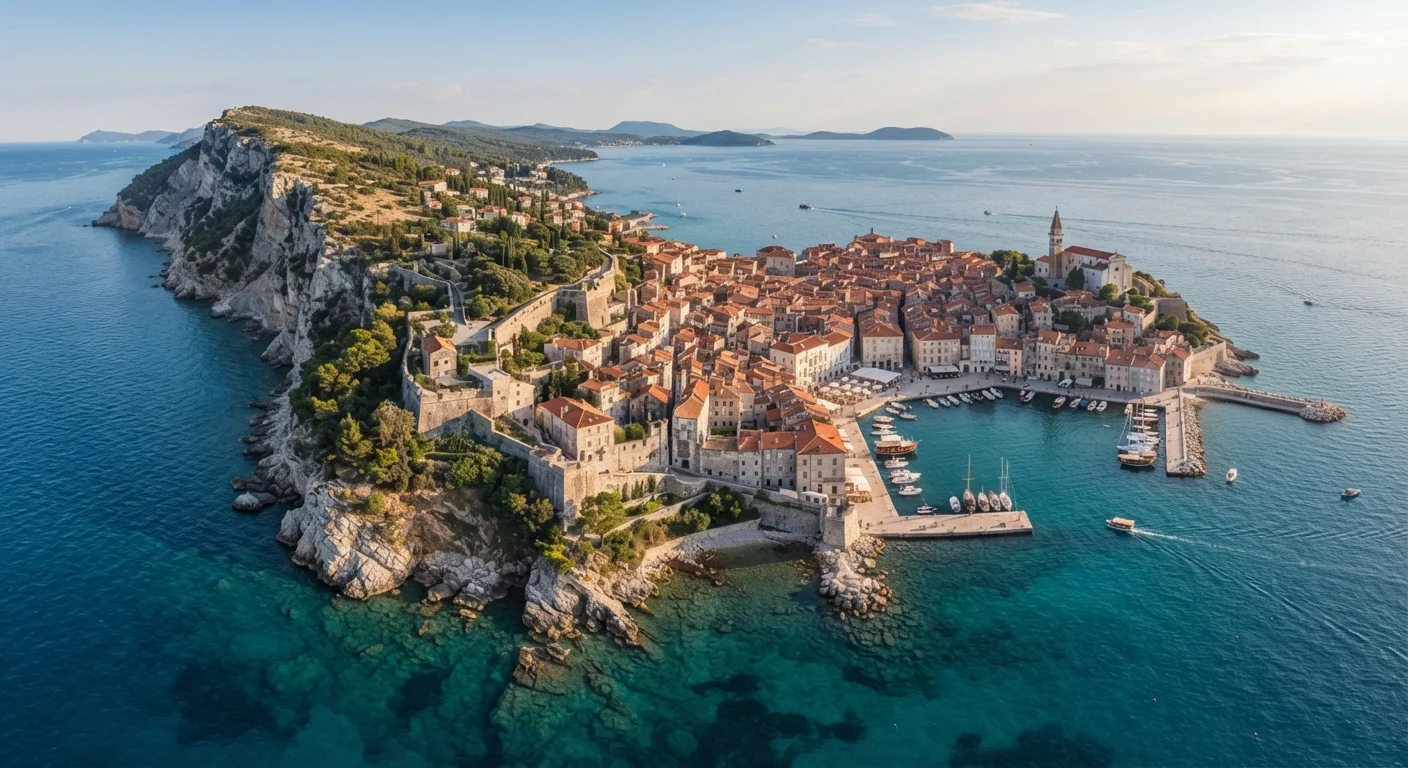
Slovenia offers one of Europe's smallest national coastlines — just three towns, anchored by Piran. A well-preserved Venetian-era port, Piran draws visitors who want the atmosphere of Venice without the crowds. It's compact, walkable, and genuinely quiet by peak-season Adriatic standards.
Italy's Adriatic coast runs from Trieste in the north to the heel of the boot. Trieste retains a Central European, coffee-house character quite unlike southern Italy; the Puglia coast further south, including the Salento peninsula, offers pale limestone towns, flat seascape, and a cuisine distinct from the rest of the country. See our guide to Italy's regional differences for broader context on how dramatically Italian character shifts by latitude.
Dalmatian Coast
The central stretch of Croatia's Adriatic shoreline, characterized by limestone karst terrain, offshore islands, and historic walled towns. It is Croatia's most visited coastal region.
Karst
A landscape formed from soluble rock (mainly limestone) that dissolves over time, producing sinkholes, caves, and the dramatic cliffs and clear waters typical of much of the Adriatic coastline.
Bora
A cold, dry, northeasterly wind common along the Adriatic, particularly in winter. It can affect ferry schedules and outdoor conditions significantly.
Riviera (regional usage)
In Adriatic travel contexts, 'Riviera' typically refers to a continuous stretch of beach-oriented coastline within a country — such as the Budva Riviera in Montenegro or the Albanian Riviera — rather than a single town.
Croatia: The Established Star
Croatia's Dalmatian coast is the Adriatic's most internationally recognized stretch, with the walled medieval city of Dubrovnik at one end and the islands of Hvar, Brač, and Korčula spread across the blue-green channel. The Istrian peninsula in the north reads differently — rolling hills, Italian culinary influences, and towns like Rovinj that feel more like Tuscany than the Mediterranean.
Croatia suits a wide range of travelers: island-hoppers using ferry networks, history enthusiasts drawn to UNESCO-listed old towns, and visitors chasing specific natural sites like Plitvice Lakes or Krka. High-season crowds at Dubrovnik and Hvar are significant — late spring and early autumn tend to offer more manageable conditions. Croatia's logistical infrastructure for independent travelers is well-developed relative to its neighbors.
1,244
Islands off Croatia's coast
Croatia's island count includes all islets and reefs; roughly 50 are permanently inhabited, according to Croatian tourism authorities.
~29 miles
Slovenia's entire Adriatic coastline
Slovenia's brief coastal access is one of the shortest national coastlines in Europe, focused on three towns: Koper, Izola, and Piran.
3
UNESCO sites along the eastern Adriatic
Dubrovnik, Kotor, and the Venetian Works of Defence across Croatia and Montenegro all hold UNESCO recognition, per the World Heritage List.
Montenegro, Albania, and the Southern Reach
Montenegro packs a surprising amount into a small territory. The Bay of Kotor — a landlocked-looking fjord ringed by stone fortifications — is the headline, but the country also offers the Budva Riviera for beach-oriented visitors and Sveti Stefan, a photogenic island village now operating as a resort. Montenegro's scale makes it feasible as a multi-day extension of a Croatia trip.
Albania's Riviera is the Adriatic's current frontier for independent travelers. The stretch from Sarandë to Himarë features turquoise coves, largely undeveloped hillsides, and a cost structure well below the regional average. Infrastructure is improving but uneven; road quality, accommodation variety, and English-language signage lag behind neighboring countries. That gap cuts both ways — it's also what keeps the beaches less crowded. Travelers interested in the wider Mediterranean stretch might compare the logistical realities of Italy's Amalfi Coast as a study in how infrastructure shapes the visitor experience.
Entry requirements, visa rules, and travel conditions across all Adriatic countries can change. Always verify current information through official government and embassy sources before traveling.