

Key Takeaways
Italy's Regional Identity
Italy is a unified nation made up of twenty distinct administrative regions, each with its own culinary traditions, architectural style, dialect, and cultural character. These regions were independent states, kingdoms, or city-republics for much of history and only unified under a single national government in 1861. As a result, traveling through Italy is less like visiting one country and more like moving through a mosaic of deeply rooted local identities.
Italy's regions are further divided into provinces and municipalities. Some regions — such as Sicily, Sardinia, and South Tyrol — hold special autonomous status, giving them greater self-governance over language, taxation, and local law.
A Country That Didn't Exist Until 1861
Most Americans approach Italy with a mental map of landmarks: the Colosseum, the canals of Venice, the Cinque Terre cliffs. That's understandable. But it flattens what is actually one of the most internally varied countries in Europe.
For the better part of two millennia, the peninsula now called Italy was not one country at all. It was a shifting collection of city-states, papal territories, kingdoms, and foreign-controlled domains — each developing its own cuisine, dialect, architecture, and civic culture. National unification, known as the Risorgimento, was only completed in 1861. That's younger than the US state of California.
The result is a country where regional identity runs extraordinarily deep. A Sicilian and a Venetian may share a passport, but they share far less when it comes to what they eat, how they build, and how they speak. Understanding this is the single most useful frame a traveler can bring to Italy.
20
Distinct administrative regions in Italy
Each region has its own president, government, and significant authority over local cultural and administrative affairs.
1861
Year of Italian national unification
Before unification, the Italian peninsula was a mosaic of independent states, meaning regional cultures had centuries to develop independently.
5
Regions with special autonomous status
Sicily, Sardinia, South Tyrol (Trentino-Alto Adige), Aosta Valley, and Friuli-Venezia Giulia hold greater self-governance, including over language and local taxation.
North, Center, South: Three Italys in One Country
The broadest useful division is geographic: the North, the Center, and the South — each shaped by different climates, economic histories, and outside influences.
Northern Italy — encompassing regions like Lombardy, Piedmont, Veneto, and Emilia-Romagna — sits at the foot of the Alps and has absorbed centuries of Germanic, French, and Austrian influence. The cuisine here leans toward butter, cream, risotto, and cured meats. Bologna, the capital of Emilia-Romagna, is widely considered Italy's gastronomic heart, giving the world ragù, Parmigiano-Reggiano, and prosciutto di Parma.
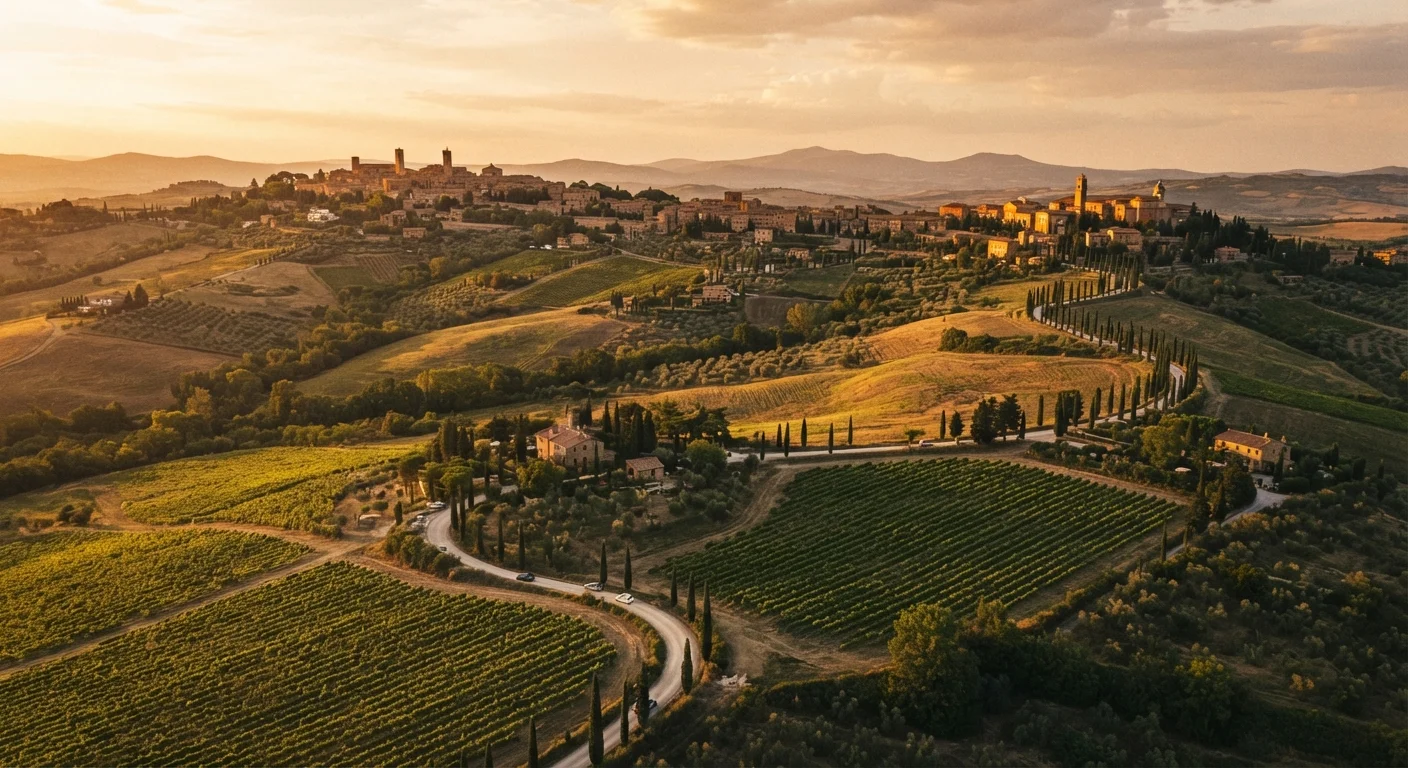
Central Italy — Tuscany, Umbria, Le Marche, and Lazio — is the Italy of rolling hills, Renaissance art, and the olive grove. Rome anchors this zone, but spend time outside the capital and you'll find medieval hill towns, world-class wines, and a quieter, more agricultural rhythm. Le Marche's Adriatic coast offers a compelling alternative to the more-visited Tuscan interior.
Southern Italy — Campania, Puglia, Basilicata, Calabria, Sicily, and Sardinia — is the Italy of Mediterranean heat, ancient Greek ruins, bold tomato-driven cooking, and the kind of unhurried daily life that travelers often say they weren't expecting. The Amalfi Coast, technically part of Campania, is one of the South's most dramatic draws — though its logistics demand real preparation.
What Region Actually Changes: A Practical Breakdown
Regional difference isn't abstract — it shapes the on-the-ground experience at every turn.
- Food: Pizza in Naples bears almost no resemblance to the flatbread variations found in Rome or the stuffed breads of the South Tyrol. Pasta shapes, sauce bases, and even meal timing shift region by region.
- Architecture: The Baroque exuberance of Sicily's Val di Noto looks nothing like the Gothic brick towers of Bologna or the Alpine farmhouses of Trentino.
- Dialect: Italian dialects are not mere accents. Neapolitan, Venetian, and Sicilian have distinct vocabularies and grammatical structures that older generations still use at home.
- Landscape: From the Dolomite peaks of South Tyrol to the volcanic coastline of Sicily to the trulli-studded plateau of Puglia — the physical character of each region is its own.
- Tourist density: Tuscany and the Amalfi Coast draw enormous crowds. Basilicata and Molise see a fraction of those numbers, which is itself a meaningful difference for how a trip feels.
How to Use Regional Thinking When Planning a Trip
The most practical shift a traveler can make is to choose a region as the anchor of a trip rather than a list of cities. A week in Puglia — moving between Lecce, the Valle d'Itria, and the Gargano coast — gives a coherent sense of a place that a single night in each of five cities never will.
That said, regions aren't rigid travel units. Many pair naturally: Tuscany and Umbria share a border and a sensibility. Emilia-Romagna flows logically into the Veneto. Sicily and Sardinia, as islands, work best as self-contained trips.
For comparison, consider how Portugal handles this same regional question — Portugal's major regions each reward distinct kinds of travel, and the framing there is just as useful for Italian planning.
Plan by Region, Not by Landmark List
Before booking anything, pick one or two regions and research them as distinct destinations — their cuisine, their landscape, their pace. Then choose cities within that region as stopping points. This approach produces a far more coherent and satisfying trip than working backward from a list of famous sites spread across the country.
Finally, resist the pressure to see everything. Italy's depth is a feature, not a problem. The traveler who comes back from two weeks in Emilia-Romagna having eaten well, explored slowly, and actually understood one corner of the country has had a richer experience than someone who checked off ten cities in the same time.