

| Country size | Approximately 35,500 sq miles (similar to Indiana) |
| Capital region | Lisbon — also the country's largest city |
| Alentejo's defining feature | Cork oak forests, plains, and medieval walled towns |
| Algarve coastline length | Roughly 100 miles of Atlantic coastline |
| Lisbon–Porto rail travel time | Approximately 3 hours by Alfa Pendular express (Verify current schedules with CP (Comboios de Portugal)) |
| UNESCO sites | Porto's historic centre, Évora, and Sintra among several (UNESCO World Heritage List) |
Why Portugal's Regions Deserve Individual Attention
Portugal is smaller than Indiana, yet it holds an almost implausible range of landscapes, climates, and identities within its borders. Travellers who treat the country as a single backdrop often leave having seen only a sliver of what it offers. Each major region — Lisbon, Porto, Alentejo, and the Algarve — functions almost like a separate destination, with its own character, cuisine, pace, and reason for being on your itinerary.
Understanding regional differences before you travel helps you match expectations to reality, and reality to the kind of trip you actually want. For a similar approach applied to other compact but richly varied countries, the hidden geography of Italy offers a useful parallel.
| Country size | Approximately 35,500 sq miles (similar to Indiana) |
| Capital region | Lisbon — also the country's largest city |
| Alentejo's defining feature | Cork oak forests, plains, and medieval walled towns |
| Algarve coastline length | Roughly 100 miles of Atlantic coastline |
| Lisbon–Porto rail travel time | Approximately 3 hours by Alfa Pendular express (Verify current schedules with CP (Comboios de Portugal)) |
| UNESCO sites | Porto's historic centre, Évora, and Sintra among several (UNESCO World Heritage List) |
Lisbon: The Capital That Rewards Slow Walking
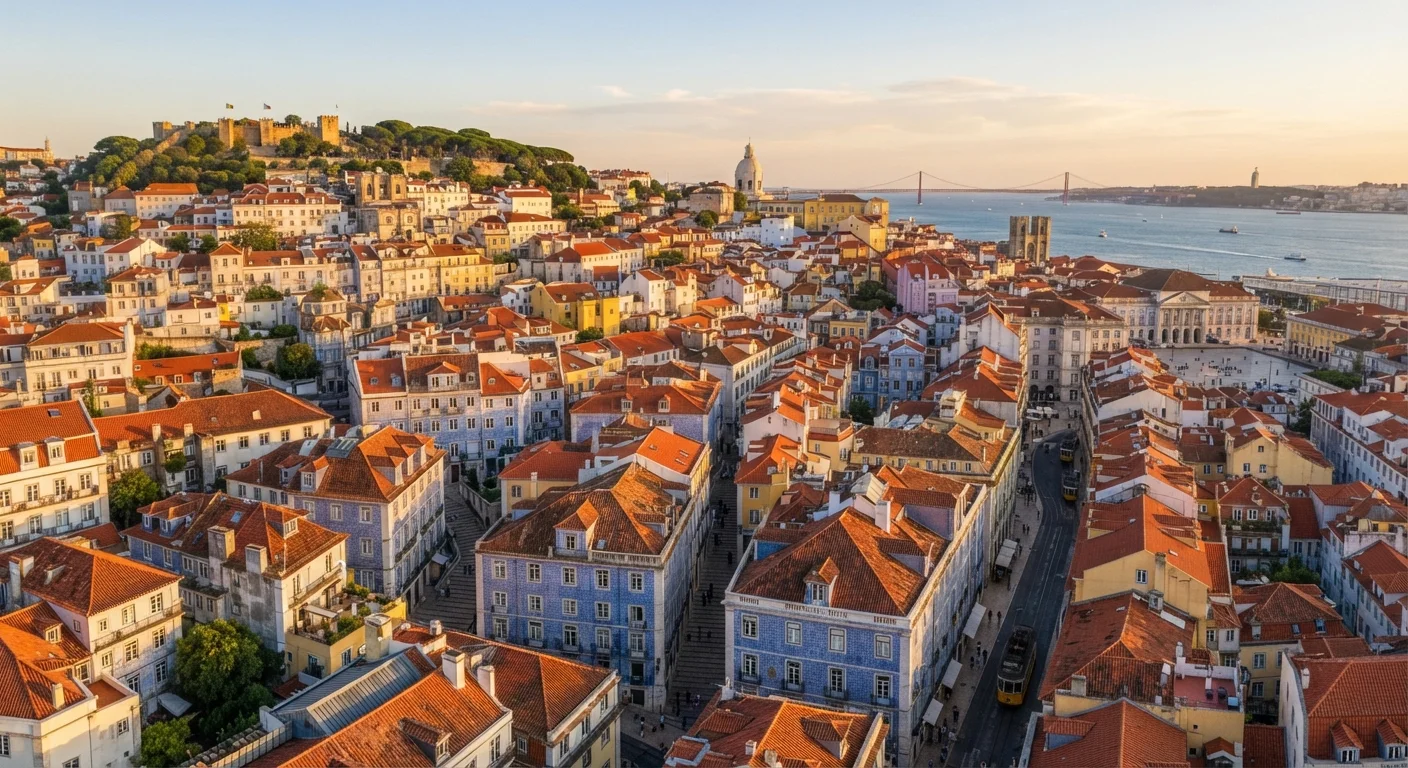
Portugal's capital sits at the mouth of the Tagus River, a city of seven hills stitched together by yellow trams, steep staircases called calcadas, and the haunting music of fado. Lisbon is dense with history — Moorish fortresses, Age of Discovery monuments, ornate Manueline stonework — but it wears it lightly, layering old neighbourhoods like Alfama and Mouraria with contemporary restaurants, independent bookshops, and busy riverfront markets.
The city rewards visitors who walk rather than rush. Miradouros (viewpoints) punctuate every hill, offering natural rest stops with sweeping city views. Lisbon also serves as the most practical entry point to Portugal for travelers connecting onward to Sintra, the Setúbal Peninsula, or even a crossing to Morocco — a journey whose cultural contrast is explored in the Morocco imperial cities guide.
Porto, Alentejo, and the Algarve: Three Distinct Temperaments
Porto sits in the north, a city of granite, port wine cellars, and the Douro River. Where Lisbon feels Mediterranean and open-skied, Porto feels more Atlantic — windswept, cooler, and architecturally grittier in the most appealing way. The city's Ribeira district is a UNESCO World Heritage Site, and the wine lodges of Vila Nova de Gaia across the river offer a straightforward introduction to the region's most famous export. Porto is also the gateway to the Douro Valley wine country, one of the oldest demarcated wine regions in the world.
Alentejo is Portugal's interior heartland, a landscape of cork oak forests, rolling wheat plains, whitewashed villages, and medieval walled towns like Évora and Monsaraz. It moves at a noticeably slower pace than either coastal city. The region produces some of Portugal's most respected wines and olive oils, and its cuisine — hearty, pork-forward, rooted in the land — reflects centuries of rural self-sufficiency. For travelers seeking quiet and space, Alentejo is the counterweight to Lisbon's energy.
The Algarve, Portugal's southernmost region, is where Atlantic drama meets Mediterranean warmth. Dramatic limestone cliffs, sea caves, and wide sandy beaches define the coastline. The western Algarve around Sagres and Cape St. Vincent remains wilder and windier; the central stretch between Lagos and Faro is more developed and popular in summer. The Algarve is Portugal's most visited region by international tourists, which means it requires some planning to find quieter corners. For a more detailed look at how Portugal's coastal character shifts from south to north, the coastal Portugal regional guide covers the full range.
Fado
A traditional Portuguese music genre characterized by mournful melodies and themes of longing, most closely associated with Lisbon's older neighborhoods.
Miradouro
A scenic viewpoint or belvedere, typically found at elevated spots throughout Lisbon and Porto, designed for taking in city or landscape panoramas.
Manueline
A Portuguese architectural style from the early 16th century, known for elaborate ornamentation that blends Gothic stonework with maritime and nautical motifs.
Calcadas
The steep staircase streets and cobblestone pathways found throughout hilly Portuguese cities, particularly Lisbon.
Choosing the Right Region for Your Trip
No region is objectively better — the right choice depends on your travel priorities. Urban history and nightlife point toward Lisbon. Authentic food culture and wine tourism align well with Porto and Alentejo. Beach-centered trips naturally gravitate toward the Algarve, though shoulder season visits (spring or early autumn) offer a calmer experience than peak summer. Many travelers combine two regions in a single trip; Lisbon and the Algarve are linked by direct train service, while Lisbon and Porto sit about three hours apart by express rail.
Travelers interested in comparing how regional diversity shapes a destination might also find value in the Adriatic coastal breakdown, which applies a similar lens to a very different European coastline. As with any destination, conditions, entry requirements, and local regulations change — always verify current information with official Portuguese tourism and government sources before travel.
~30M
Annual international tourist arrivals to Portugal
Portugal has consistently ranked among Europe's most visited countries, according to national tourism authority data.
1756
Year the Douro Valley was first demarcated as a wine region
Making it one of the world's oldest officially designated wine-producing zones, predating most European equivalents.
300+
Days of sunshine per year in the Algarve
The Algarve's southern latitude gives it one of the sunniest climates in continental Europe, according to meteorological averages.