

| Zone system used in the US | USDA Plant Hardiness Zone Map (USDA Agricultural Research Service) |
| Total number of zones | 13 (Zones 1–13, each split into 'a' and 'b') (USDA Plant Hardiness Zone Map) |
| What zones measure | Average annual extreme minimum winter temperature (USDA Agricultural Research Service) |
| Temperature data span | 30-year climate averages (USDA Plant Hardiness Zone Map (2012 revision)) |
| How to look up your zone | Search by ZIP code at planthardiness.ars.usda.gov |
| Container plant rule of thumb | Select plants rated 1–2 zones hardier than your in-ground zone (General horticultural guidance) |
What Plant Hardiness Zones Actually Measure
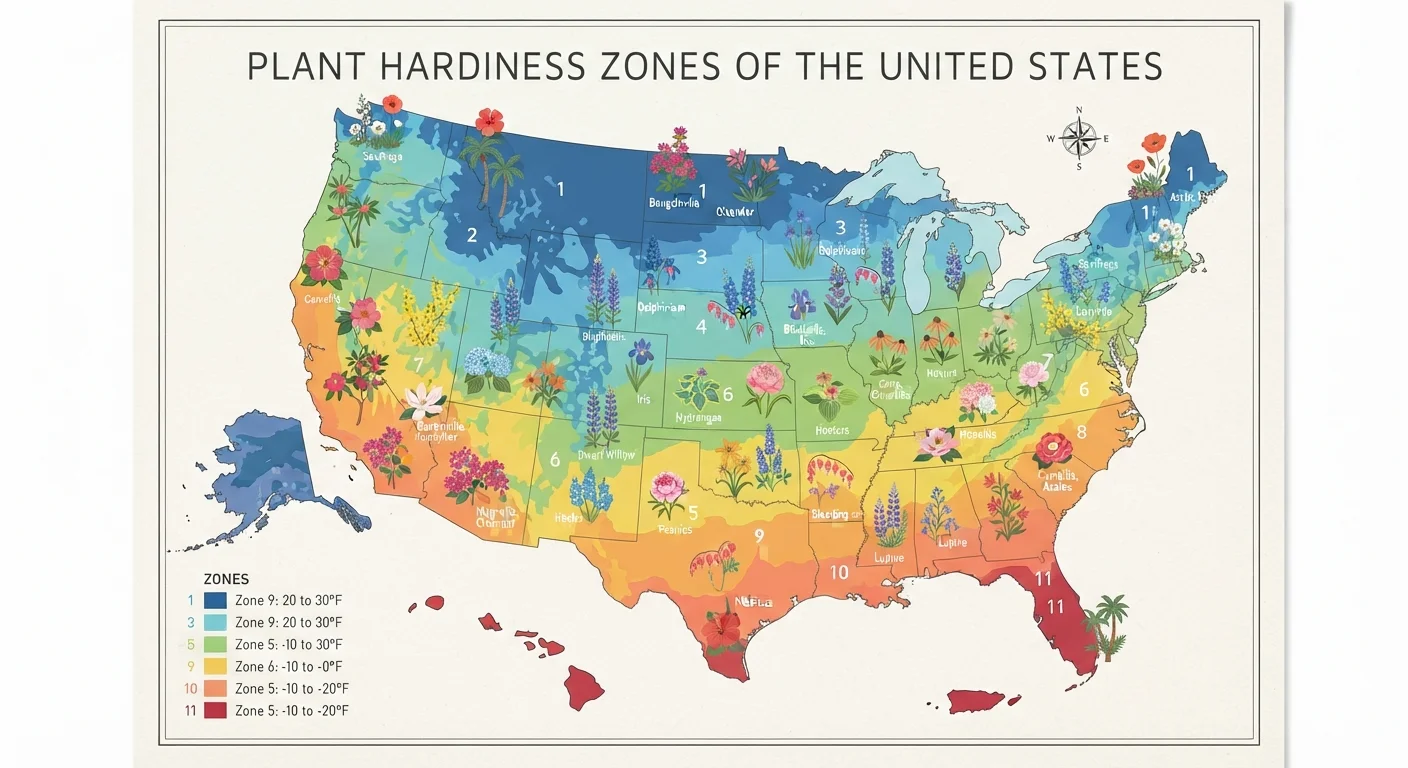
A plant hardiness zone is a geographically defined area that shares a similar range of minimum winter temperatures. The most widely used system in the United States is the USDA Plant Hardiness Zone Map, which divides the country into 13 numbered zones — from Zone 1 (coldest, averaging below −60°F) to Zone 13 (warmest, averaging above 60°F). Each zone is further split into two half-zones, labeled "a" (slightly cooler) and "b" (slightly warmer), giving gardeners more precision when selecting plants.
The map is built from 30-year temperature averages, so it reflects long-term climate patterns rather than any single season. Critically, hardiness zones measure only average annual extreme minimum temperature — not summer heat, humidity, frost-free days, or rainfall. A plant rated for Zone 6 can survive that zone's coldest winters, but the zone number tells you nothing about whether it will thrive in summer heat or drought.
| Zone system used in the US | USDA Plant Hardiness Zone Map (USDA Agricultural Research Service) |
| Total number of zones | 13 (Zones 1–13, each split into 'a' and 'b') (USDA Plant Hardiness Zone Map) |
| What zones measure | Average annual extreme minimum winter temperature (USDA Agricultural Research Service) |
| Temperature data span | 30-year climate averages (USDA Plant Hardiness Zone Map (2012 revision)) |
| How to look up your zone | Search by ZIP code at planthardiness.ars.usda.gov |
| Container plant rule of thumb | Select plants rated 1–2 zones hardier than your in-ground zone (General horticultural guidance) |
How to Find Your Zone
The USDA maintains a free, searchable online version of the Plant Hardiness Zone Map at planthardiness.ars.usda.gov. Enter your ZIP code to find your zone instantly. Most nursery plant tags, seed catalogs, and plant encyclopedias reference USDA zones, so this is the number you'll use most frequently when shopping for perennials, shrubs, and trees.
Keep a few caveats in mind:
- Microclimates matter. A south-facing wall, low-lying frost pocket, or urban heat island can shift conditions one half-zone warmer or cooler than the map suggests.
- The map is updated periodically. The most recent revision reflects data through 2012; local conditions may have shifted since then, so treat your zone as a starting point rather than an absolute rule.
- Other countries use different systems. Canada uses the Plant Hardiness Zones of Canada; the Royal Horticultural Society uses its own scale for the UK. If you're referencing an international source, confirm which system its zone numbers follow.
When selecting plants for vertical layering in your garden, zone compatibility is the first filter to apply. See our guide to plant heights and growth habits for how to combine zone-appropriate species effectively by canopy layer.
Beyond Cold Hardiness: Other Climate Factors to Consider
Hardiness zones are a necessary starting point — but not the whole picture. Here's what else influences whether a plant will succeed in your garden:
Hardiness Zone
A geographic area defined by its average annual minimum winter temperature, used to indicate which plants can be expected to survive winter conditions in that region.
Microclimate
A localized climate condition — such as the warmth near a south-facing wall or the cold of a low-lying frost pocket — that differs meaningfully from the surrounding area's general climate.
Heat Zone
A classification system (AHS Heat Zone Map) that ranks regions by the number of days per year temperatures exceed 86°F, complementing cold-hardiness zone data.
Chill Hours
The cumulative number of hours during winter that temperatures remain at or below 45°F, a threshold required by many fruit trees and shrubs to break dormancy and bloom successfully.
Half-Zone
A subdivision within each USDA hardiness zone, designated 'a' (cooler half) or 'b' (warmer half), providing finer temperature resolution for plant selection.
- Heat tolerance: The American Horticultural Society (AHS) publishes a separate Heat Zone Map that tracks the average number of days per year above 86°F. Some cold-hardy plants struggle in hot, humid summers even if they survive winter fine.
- Chill hours: Many fruit trees and flowering shrubs require a minimum number of hours below 45°F during winter dormancy to bloom and fruit properly. Gardeners in mild-winter zones (9–11) must select low-chill varieties.
- Soil drainage and moisture: A plant may be zone-appropriate but fail in waterlogged or extremely dry soil. Drought-tolerant gardening strategies are worth understanding even in moderate zones if your soil or microclimate trends dry.
- Container gardening exception: Potted plants experience much greater temperature swings than in-ground plants, since their roots are exposed to air on all sides. A general rule: grow container plants rated one or two zones hardier than your local zone. See our container gardening guide for more on this.
For gardeners interested in natives, hardiness zone is just one compatibility check — native species are also adapted to regional soils, rainfall cycles, and local pollinators. Our article on native plants vs. exotic ornamentals covers those broader trade-offs.
Zones Are a Guide, Not a Guarantee
A plant listed as hardy to Zone 6 has been observed to survive typical Zone 6 winters under reasonable growing conditions — but site-specific factors like soil drainage, wind exposure, and snow cover can shift outcomes. New plantings are also more vulnerable than established ones. Use zone ratings as a strong starting point, and observe how your specific garden performs over multiple seasons.