

Key Takeaways
Option A
Raised Bed Gardening
The controlled, accessible growing environment.
Best for: Gardeners dealing with poor native soil, limited mobility, or wanting precise control over drainage and soil composition.
Option B
In-Ground Planting
The traditional, low-cost approach with natural depth.
Best for: Gardeners with decent existing soil who want to grow at scale without upfront construction costs.
If your native soil is compacted, rocky, or heavily clay-based
Raised Bed Gardening
Raised beds let you bypass poor soil entirely by filling with a custom mix suited to your crops, avoiding years of soil amendment work.
If you're gardening on a tight budget and have reasonable existing soil
In-Ground Planting
In-ground gardening has minimal startup costs — you work with what's there, adding compost and amendments gradually over time.
If you have back or knee problems and need an ergonomic setup
Raised Bed Gardening
A raised bed built to 24–30 inches high dramatically reduces bending and kneeling, making gardening more sustainable long-term.
If you want to grow large crops like corn, squash, or fruit trees
In-Ground Planting
Sprawling or deep-rooted plants benefit from the unrestricted space and natural moisture retention that in-ground beds provide.
If you garden in a short-season or colder climate
Raised Bed Gardening
Raised beds warm up several weeks earlier than ground-level soil in spring, giving cold-climate gardeners a meaningful head start.
Understanding the Core Difference
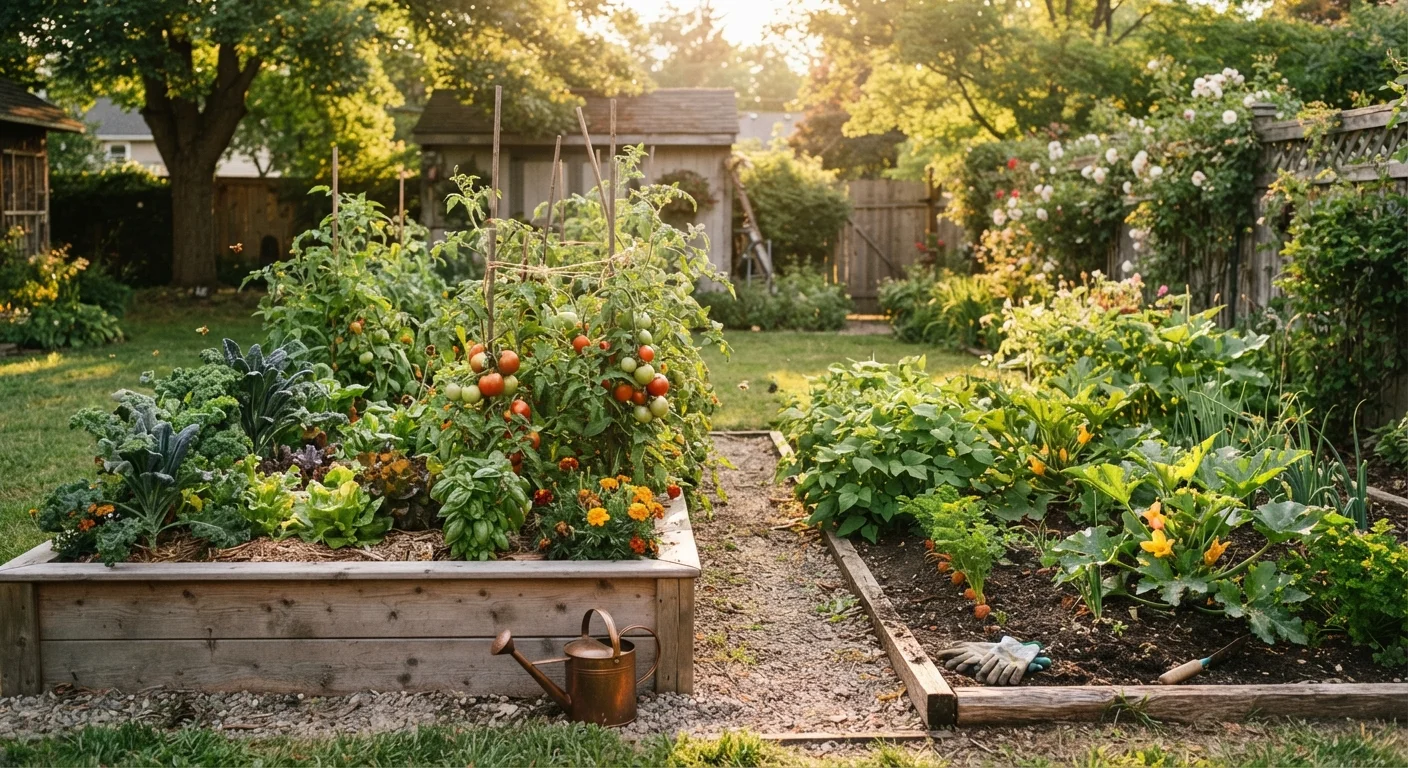
At their simplest, raised beds are contained growing structures — typically framed in wood, metal, or composite material — filled with imported or blended soil placed above the existing ground level. In-ground planting means working directly within your native soil, amending it as needed but leaving the natural profile intact.
Neither method is universally superior. The choice turns on what your land is already offering and what you need your garden to do. A yard with rich loam and good drainage may never need a raised bed. A suburban plot with compacted subsoil or a history of construction fill is a different story entirely.
For gardeners weighing a third option entirely, our guide to container gardening for small spaces covers what's possible when ground space is limited.
| Criterion | Raised Bed Gardening | In-Ground Planting |
|---|---|---|
| Upfront cost | Moderate to high (materials + soil) | Low (amendments only) |
| Soil control | Full — you choose the mix | Limited by native soil quality |
| Drainage | Excellent — free-draining by design | Depends on native soil type |
| Season length | Extended — warms up faster in spring | Standard — follows ambient soil temps |
| Root depth | Limited by frame depth (usually 12–18 in.) | Unrestricted |
| Accessibility | High — adjustable working height | Requires kneeling or bending |
| Weed pressure | Generally lower | Can be significant |
| Long-term soil health | Requires ongoing inputs | Can become self-sustaining over time |
Soil, Drainage, and Root Health
Soil quality is where the two approaches diverge most sharply. With raised beds, you choose and build your growing medium from the ground up — typically a blend of topsoil, compost, and amendments suited to your crops. This matters enormously for vegetables and herbs that are sensitive to compaction or drainage. Excess water drains freely from the base of a raised structure, reducing root rot risk.
In-ground planting depends on what nature and previous land use have left you with. Heavy clay soils drain poorly and can waterlog roots; sandy soils drain too fast and hold little nutrient. Both can be improved over time with consistent organic matter additions — but this is a multi-season process. For guidance on feeding either system effectively, see our comparison of organic vs. synthetic fertilisers for home gardeners.
Deep-rooted plants — parsnips, large tomato varieties, or fruit shrubs — generally do better in the ground, where roots can follow moisture and nutrients downward without hitting a frame wall.
6–8 weeks
Earlier soil warmth in raised beds vs. ground
Raised bed soil can warm to planting temperature several weeks ahead of adjacent ground-level soil in cooler US climates, according to general horticultural guidance from university extension programs.
~$200–$600+
Typical cost to build one 4×8 ft raised bed
Costs vary significantly by material choice (pine, cedar, galvanized steel) and whether purchased soil or homemade compost blend is used to fill the structure.
3–5 years
Timeframe to significantly improve poor native soil
Consistent organic matter additions — compost, cover crops, mulch — can meaningfully improve soil structure and biology within a few growing seasons, per cooperative extension soil health guidance.
Cost, Setup, and Long-Term Maintenance
The upfront cost gap between these methods is real. A basic in-ground plot requires little more than a spade, compost, and time. A well-built raised bed involves frame materials (lumber, galvanized steel, or composite boards), hardware, and enough quality soil to fill the structure — which adds up quickly once you factor depth and volume.
That said, raised beds can reduce long-term labor. The contained environment discourages some soil-borne weeds, and their defined borders make path management easier. Drip irrigation lines can be routed more efficiently in a raised bed layout — a topic worth exploring in our drip irrigation vs. sprinkler systems comparison.
In-ground plots require ongoing soil improvement — regular compost additions, potential pH correction, and periodic aeration — but this investment compounds: healthy ground soil becomes self-sustaining over years in a way that imported bed mix may not.
A Note on Raised Bed Materials
If you're building a raised bed for food crops, material choice matters. Untreated rot-resistant woods (cedar, redwood) are widely used and considered safe. Avoid wood treated with older-generation preservatives that may leach harmful compounds into soil. Modern pressure-treated lumber regulations in the US have changed significantly, but it's worth verifying current standards with your local extension service before using any treated wood near edible plants.
Choosing What Works for Your Garden
The most useful question to ask is not which method is objectively better, but which fits your specific site and gardening goals. Test your native soil first — a basic home soil test (available through most cooperative extension services) will reveal pH, nutrient levels, and texture. If your soil tests well, in-ground planting may serve you just as effectively at a fraction of the cost.
If you're working with a constrained space or unconventional growing area, it's also worth thinking vertically. Our guide to the layered garden and plant growth habits can help you maximize productivity regardless of which ground method you choose.
Many experienced gardeners ultimately use both: raised beds for crops that demand precision — salad greens, root vegetables, herbs — and in-ground beds for sprawling or deep-rooted plants that benefit from unconstrained space. A hybrid approach is often the most practical answer.